Peace lily (Spathiphyllum wallisii)
Also known as: white sails, spathe flower
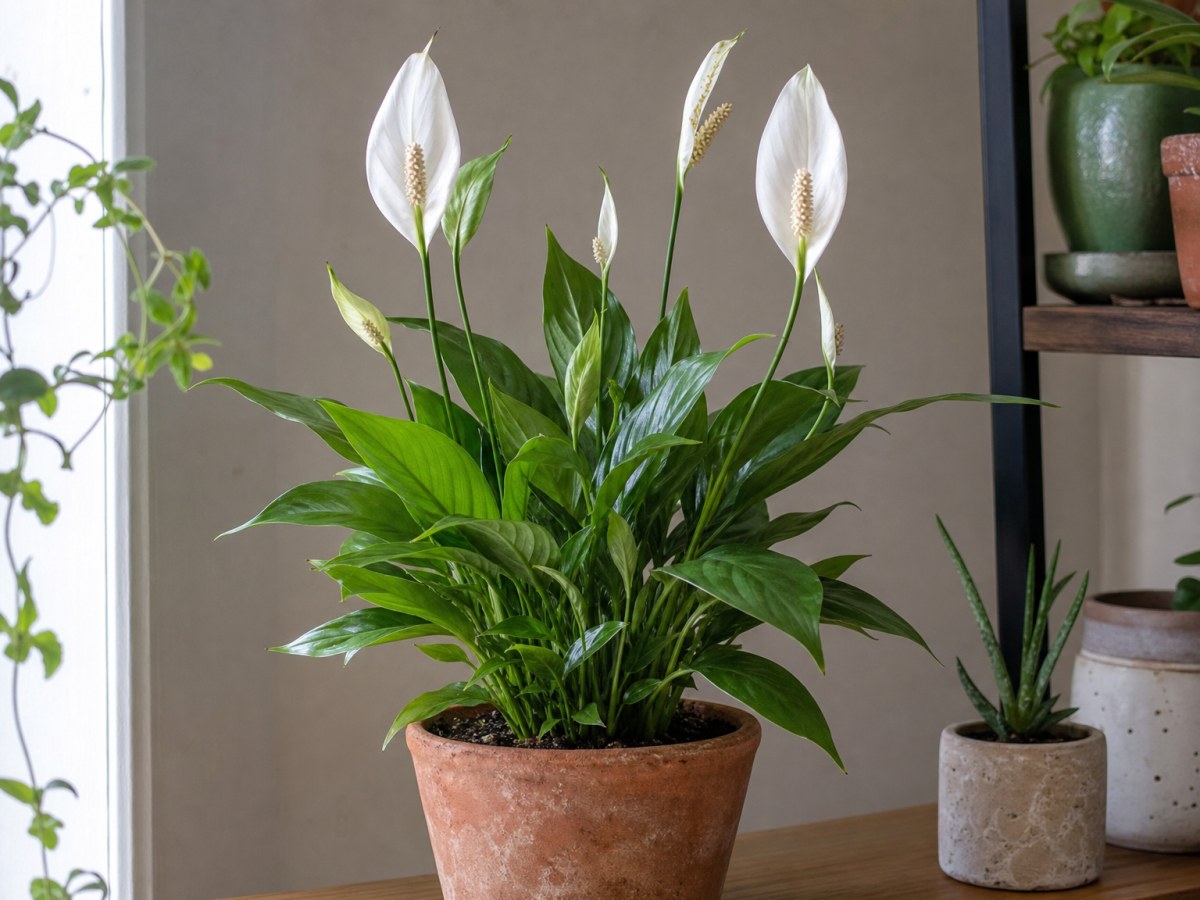
The peace lily (Spathiphyllum wallisii) is the houseplant with glossy dark green leaves and white, sail-like blooms held above the foliage. Despite the name, it is not a lily at all but an aroid, related to anthurium, native to the wet tropical forests of Colombia and Venezuela. It adapts well to indoor rooms with indirect light, blooms readily and lets you know when it is thirsty by drooping. The main caution is pets, because the plant contains irritating crystals.
Quick info
- LightBright, indirect light with no direct sun; it tolerates shade but blooms less.
- Ideal temperatureThe RHS gives a minimum of 50–59 °F (10–15 °C); long chills and frost damage it.
- WateringKeep the soil moist but not soggy; water when the top layer dries.
- GrowthModerate; it forms a compact clump over time.
- MaintenanceLow: remove spent blooms, dust the leaves and divide when crowded.
- PetsToxic to cats and dogs: calcium oxalate causes mouth burning and vomiting.
Fact sheet
- Scientific name
- Spathiphyllum wallisii Regel
- Common names
- white sails, spathe flower
- Family
- Araceae
- Native to
- Colombia and Venezuela
- Plant type
- Herbaceous perennial
- Light
- Bright indirect
- Watering
- When top inch is dry
- Size when grown
- 0.7–1.6 ft (0.2–0.5 m)
- Frost
- Not frost hardy (min. 50 °F (10 °C))
- USDA zones
- 10b-12b
Needs
- Light Bright indirect 2/3
- Water When top inch is dry 2/3
- Warmth Tropical 3/3
- Humidity Average 2/3
- Growth Moderate 2/3
- Maintenance Low 1/3
Where it comes from
Kew's Plants of the World Online lists Spathiphyllum wallisii as native to Colombia and Venezuela, where it grows in the wet tropics. Botanist Eduard Regel described it in 1877 in the German journal Gartenflora. POWO also records introduced populations in Cuba, the Dominican Republic, Puerto Rico, Honduras and southwestern Mexico, among other places.
The University of São Paulo's ESALQ describes it as a stemless, rhizomatous perennial about 8–12 in (20–30 cm) tall. The genus has around 60 species, and many plants sold as peace lilies are cultivars and hybrids. Some get much bigger than the species: UF/IFAS Extension notes that 'Sensation' reaches about 6 ft (1.8 m), while 'Little Angel' stays at 12–15 in (30–38 cm).
How to recognize it
- Leaves: erect, lance-shaped, dark green, glossy and firm, with a prominent midrib. They rise in a rosette straight from the soil on long stalks.
- Bloom: what looks like a petal is the spathe, a modified white oval leaf up to 6 in (15 cm) long that wraps a slender cream spadix carrying the tiny true flowers.
- Color change: over time the white spathe turns pale green. That is simply the bloom aging.
- Size: the species forms low clumps about 8–20 in (20–50 cm) tall. Commercial hybrids can be much larger.
Variegated cultivars exist, such as 'Domino', with white-flecked leaves.
Care
Light
Give it bright but indirect light. UF/IFAS Extension warns that direct sun burns the leaves and makes the plant decline. It tolerates shade well, but the RHS notes that flowering may suffer in deep shade.
Watering
Keep the soil moist but not soggy, letting the top layer dry between waterings. Bottom watering, setting the pot in a saucer of water for a few minutes and then draining it, works well. When it runs dry, the leaves droop; they usually perk up after watering, but repeated wilting weakens the plant.
Soil and pot
Use a potting mix rich in organic matter, slightly acidic and well drained. The pot needs a drainage hole. When roots fill the pot, divide the plant or move it up one size.
Temperature and humidity
The RHS rates it as needing a minimum of 50–59 °F (10–15 °C). NC State Extension warns that extended periods below 40 °F (4 °C) damage leaves, stems and roots, and UF/IFAS notes damage at around 35 °F (2 °C). Frost kills it. Very dry air is one cause of brown tips, so raise humidity in air-conditioned rooms.
Fertilizing
Use a balanced liquid fertilizer in spring and summer, following the label for dose and frequency. The plant has no salt tolerance, so overfeeding burns the leaf tips.
Pruning
No pruning is needed. Cut faded green or dry flower stalks at the base and remove old leaves. Wipe the leaves with a damp cloth to remove dust.
Propagation
By division: the RHS recommends doing it in winter or right after flowering. Unpot the plant, split the clump into pieces with leaves and roots and pot each one up.
Common problems
No flowers
The most common cause is too little light. According to UF/IFAS, the plant sets flowers in response to short days, long nights and cooler temperatures, so it blooms more at certain times of year. Move it somewhere brighter, out of direct sun, and give it time.
Brown leaf tips
NC State lists three causes: direct sun, underwatering and low humidity. Overfeeding and salt also burn the tips.
Drooping leaves
If the soil is dry, it is thirsty: water thoroughly. If the soil is soggy, it may be root rot; let it dry and check the roots.
Yellow leaves
An old leaf yellowing now and then is normal. Many at once point to irregular watering, waterlogging or strong sun.
Green flowers
The white spathe turns pale green as it ages. It is not a disease; just cut the stalk.
Pests
Mealybugs are the most common indoor pest, according to NC State. Wipe them off with a cotton swab dipped in rubbing alcohol and use insecticidal soap if they persist.
Safety: pets and children
Toxic to pets according to ASPCA (página do gênero Spathiphyllum); NC State Extension (cavalos)
The ASPCA lists the genus Spathiphyllum as toxic to dogs and cats. The leaves contain insoluble calcium oxalate crystals, which cause oral irritation, intense burning of the mouth, tongue and lips, heavy drooling, vomiting and difficulty swallowing. NC State Extension also lists it as a problem for horses and children.
The RHS describes it as harmful if eaten and a skin and eye irritant. Wear gloves when dividing it and keep the pot out of reach of small children and leaf-chewing pets. If any is eaten, call your veterinarian or a poison control center. Despite its name, it is not a true lily (Lilium).
Frequently asked questions
Why won't my peace lily bloom?
Usually it needs more light. Place it near a bright window without direct sun. It also blooms more with short days and slightly cooler temperatures.
Can a peace lily take direct sun?
No. Direct sun burns the leaves. Bright, indirect light is ideal.
Is a peace lily toxic to cats?
Yes. The ASPCA lists it as toxic to cats and dogs because of calcium oxalate, which causes mouth burning, drooling, vomiting and trouble swallowing.
Why are my peace lily's leaf tips brown?
The most common causes are underwatering, dry air, direct sun and too much fertilizer.
Why did the white flower turn green?
That is the normal aging of the spathe. Cut the stalk at the base once it looks tired.
Sources
- POWO · checked on October 25, 2026
- ASPCA · checked on October 25, 2026
- RHS · checked on October 25, 2026
- NC State Extension · checked on October 25, 2026
- UF/IFAS Extension Charlotte County · checked on October 25, 2026
- ESALQ/USP · checked on October 25, 2026
Profile reviewed on October 25, 2026 · How we build our profiles
Similar plants
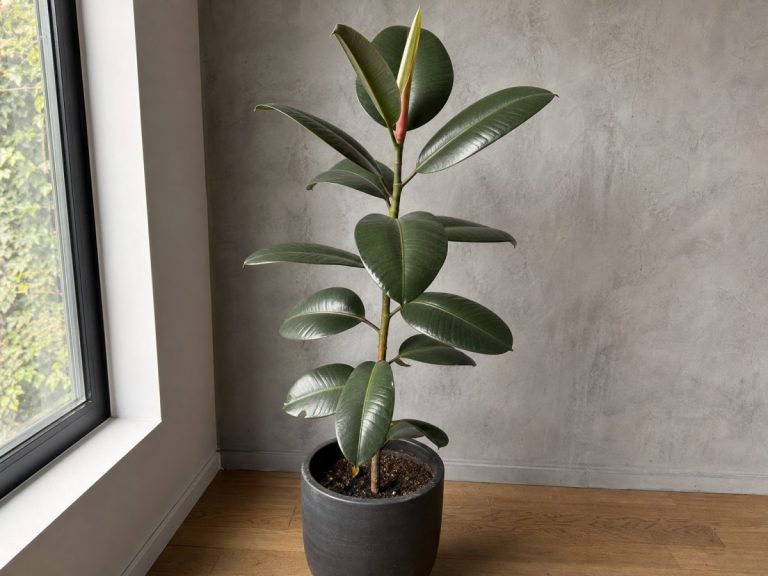
Rubber plant
Ficus elastica
- Bright indirect
- When top inch is dry
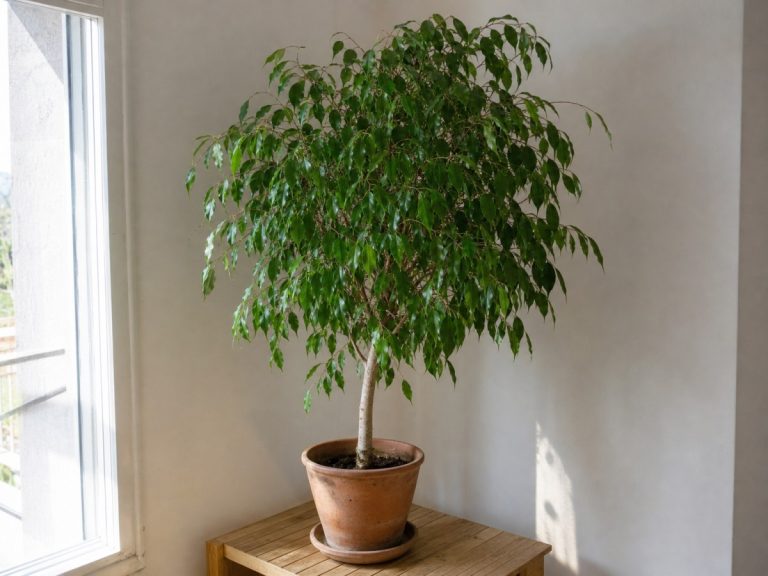
Weeping fig
Ficus benjamina
- Bright indirect
- When top inch is dry
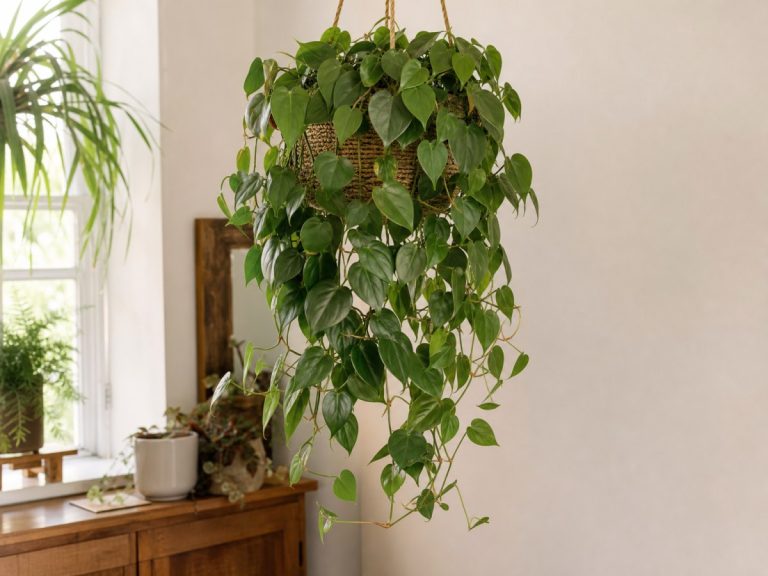
Heartleaf philodendron
Philodendron hederaceum
- Bright indirect
- When top inch is dry
Monstera
Monstera deliciosa
- Bright indirect
- When top inch is dry