Rubber plant (Ficus elastica)
Also known as: Indian rubber plant
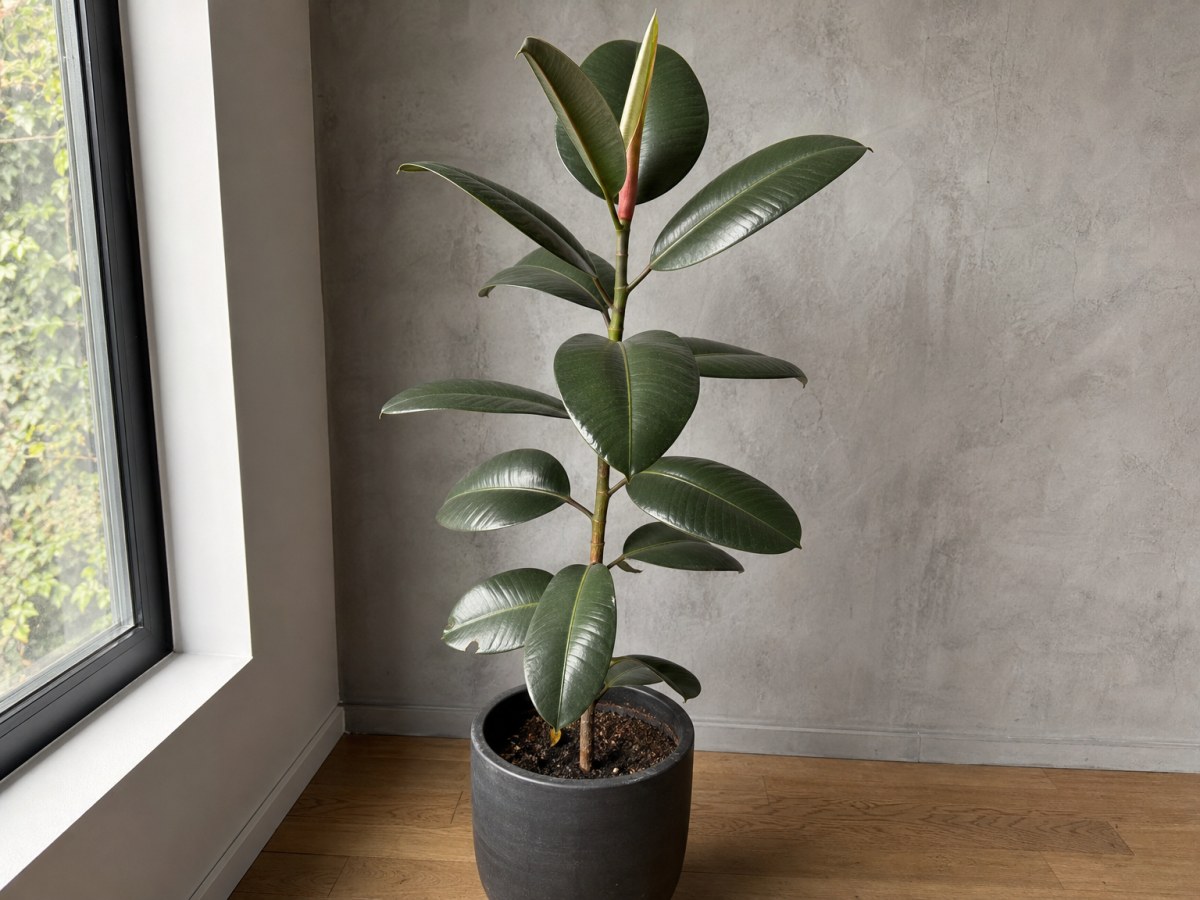
The rubber plant (Ficus elastica) is the tree with big, thick, glossy leaves that has brightened living rooms and offices for generations. It comes from the forests of the eastern Himalaya and Southeast Asia and handles indoor life well: bright light without harsh afternoon sun, moderate watering and warmth. It grows fast, needs little upkeep and comes in burgundy, cream and pink forms. It is toxic to cats, dogs and horses, and its white latex calls for gloves when pruning.
Quick info
- LightBright, indirect light or part shade; shield it from hot afternoon sun.
- Ideal temperatureNeeds more than 55 °F (13 °C); cold and drafts make it drop leaves. No frost.
- WateringWater when the top 1–2 in (2–5 cm) is dry; less in fall and winter.
- GrowthFast in warm, bright conditions.
- MaintenanceLow: dust the leaves, prune if you like and repot now and then.
- PetsToxic to cats, dogs and horses, according to the ASPCA and NC State.
Fact sheet
- Scientific name
- Ficus elastica Roxb. ex Hornem.
- Common names
- Indian rubber plant
- Family
- Moraceae
- Native to
- Eastern Himalaya to Southeast Asia
- Plant type
- Tree
- Light
- Bright indirect
- Watering
- When top inch is dry
- Size when grown
- 2.0–10 ft (0.6–3 m) (up to 98 ft (30 m) in the wild)
- Frost
- Not frost hardy (min. 55 °F (13 °C))
- USDA zones
- 9a-12b
Needs
- Light Bright indirect 2/3
- Water When top inch is dry 2/3
- Warmth Tropical 3/3
- Humidity Average 2/3
- Growth Fast 3/3
- Maintenance Low 1/3
Where it comes from
Kew's Plants of the World Online lists Ficus elastica as native to Nepal, the eastern Himalaya, Assam, Bangladesh, south-central China, Myanmar, Thailand, Laos, Vietnam, the Malay Peninsula, Sumatra and Java. It has since been planted across the tropics and now grows wild in places from Florida and the Caribbean to Spain, Sicily and many Pacific and Indian Ocean islands.
It belongs to the mulberry family, Moraceae, along with all other figs. The name was published in 1819 by Danish botanist Jens Wilken Hornemann, based on William Roxburgh's work. In the wild it can reach about 100 ft (30 m); indoors it usually stays between 2 and 10 ft (0.6 to 3 m), depending on pot size and pruning. NC State Extension notes that its latex was once tapped to make rubber, which is where the name elastica comes from.
How to recognize it
- Leaves: large, stiff and leathery, elliptic to oblong, up to about 17 in (43 cm) long and 6 in (15 cm) wide. Glossy dark green above, paler below, with smooth edges.
- Midrib: raised and pale to reddish.
- New leaves: unfurl from a pink or purplish sheath (stipule) that drops once the leaf opens.
- Latex: any cut in a leaf or stem oozes milky sap.
- Figs: small and oblong, up to about ½ in (1.3 cm), green turning yellowish. They almost never form indoors.
There are many cultivars: 'Robusta' and 'Decora' have very dark green leaves, 'Burgundy' is nearly black, 'Tineke' is splashed with cream and pale green, and 'Belize' and 'Red Ruby' add pink and red tones. Variegated forms need more light to keep their colors.
Care
Light
NC State Extension recommends bright, indirect light or part shade, with protection from afternoon sun. A spot near a bright window is ideal. In low light it survives but stretches, loses lower leaves, and variegated types turn greener. Rotate the pot now and then so it grows straight.
Watering
Water regularly but never heavily: soak the pot, then let the top 1 to 2 in (2 to 5 cm) of soil dry before watering again. From fall to late winter, when growth slows, water less. Overwatering is the most common cause of leaf drop.
Soil and pot
Use a soil-based potting mix with good drainage; the plant tolerates clay, loam or sandy soils and acid to alkaline pH. A drainage hole is a must. Move up a pot size when roots fill the container, ideally in spring.
Temperature and humidity
It needs temperatures above 55 °F (13 °C), according to NC State; the RHS rates it H1b, with lows of 50 to 59 °F (10 to 15 °C) for summer outdoors. Cold drafts and sudden drops in temperature trigger leaf loss. Average household humidity is fine. Outdoors it only thrives in warm climates; NC State lists USDA zones 9a to 12b, but frost burns the foliage.
Feeding
In spring and summer, feed once a month with a balanced liquid fertilizer at label strength. Stop in fall and winter.
Pruning
To control height or encourage branching, cut the stem tip just above a leaf in spring. Latex will drip, so wear gloves and protect the floor. Wipe the leaves with a damp cloth to remove dust and keep them shiny, and skip leaf-shine products.
Propagation
Air layering is the most dependable method: make a shallow cut in the stem, wrap it with damp sphagnum moss and plastic, and wait for roots before cutting it free. Tip cuttings also root with warmth and humidity. NC State also lists seed, which only forms where the pollinating fig wasp lives.
Common problems
Dropping leaves
NC State points to overwatering, falling temperatures and cold drafts as the usual causes. Check whether the soil is soggy and move the plant away from doors and air-conditioning vents.
Yellow lower leaves
An occasional lower leaf yellowing and dropping is normal. If many go at once, review watering and light.
Tall, leggy plant with a bare base
That is a sign of low light. Move it somewhere brighter and pinch the tip in spring to push out side shoots.
Variegated leaves losing color
Cultivars such as 'Tineke' and 'Belize' need more light. In a dim corner, new leaves come out greener.
Pests
Scale, mealybugs, spider mites and thrips can appear. Wipe the leaves, isolate the plant and use an insecticidal soap labeled for houseplants if the problem persists.
Safety: pets and children
Toxic to pets according to ASPCA
The ASPCA lists the Indian rubber plant as toxic to dogs and cats, and its Ficus entry adds horses. The toxic principles named are a protein-digesting enzyme (ficin) and a psoralen (ficusin), and the ASPCA links figs with stomach and skin irritation in animals. NC State Extension also flags the plant as a problem for dogs, cats and horses.
For people, the sources consulted give no reliable toxicity data. As a precaution, wear gloves when pruning, keep the latex away from eyes and sensitive skin, and keep fallen leaves away from toddlers and pets that chew plants. If your pet eats some, call your veterinarian.
Fun fact
Like every fig, Ficus elastica hides its flowers inside the fig, and only a specific fig wasp can pollinate them. Where that wasp is absent, the plant sets no fertile seed, NC State notes. That is why, outside Asia, it is almost always multiplied by air layering or cuttings.
Frequently asked questions
Why is my rubber plant dropping leaves?
Usually it is too much water, a sudden chill or a draft. Let the top inch or two of soil dry before watering and keep the plant away from doors and air conditioning.
Is a rubber plant toxic to cats and dogs?
Yes. The ASPCA lists it as toxic to dogs and cats, and the genus as toxic to horses too. Keep it out of reach of pets.
Can a rubber plant take direct sun?
It prefers bright, indirect light or part shade. Hot afternoon sun can scorch the leaves, especially through glass.
How do I make my rubber plant bushier?
Cut the stem tip just above a leaf in spring. Side shoots usually appear below the cut. Wear gloves because of the latex.
How should I clean the leaves?
Wipe both sides with a soft, damp cloth. Avoid oils and leaf-shine sprays, which clog pores and attract dust.
Sources
- POWO · checked on October 25, 2026
- ASPCA · checked on October 25, 2026
- ASPCA · checked on October 25, 2026
- NC State Extension · checked on October 25, 2026
- RHS · checked on October 25, 2026
Profile reviewed on October 25, 2026 · How we build our profiles
Similar plants

Fiddle-leaf fig
Ficus lyrata
- Bright indirect
- When top inch is dry
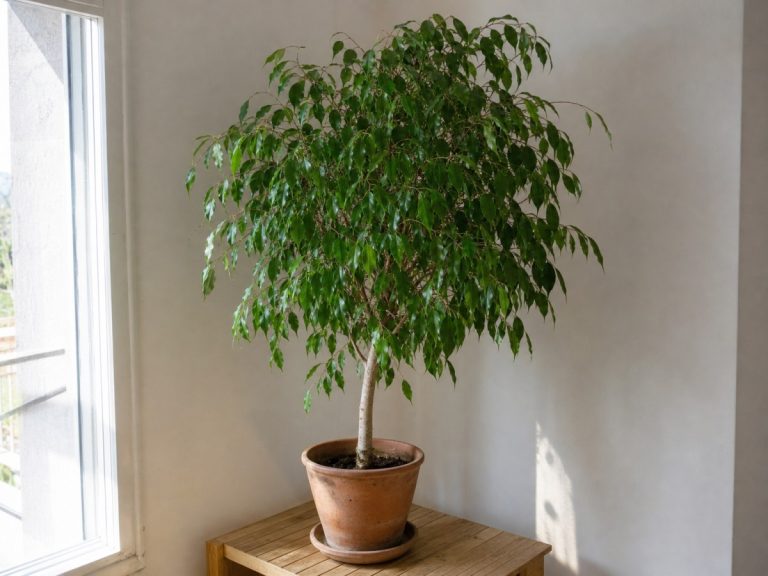
Weeping fig
Ficus benjamina
- Bright indirect
- When top inch is dry
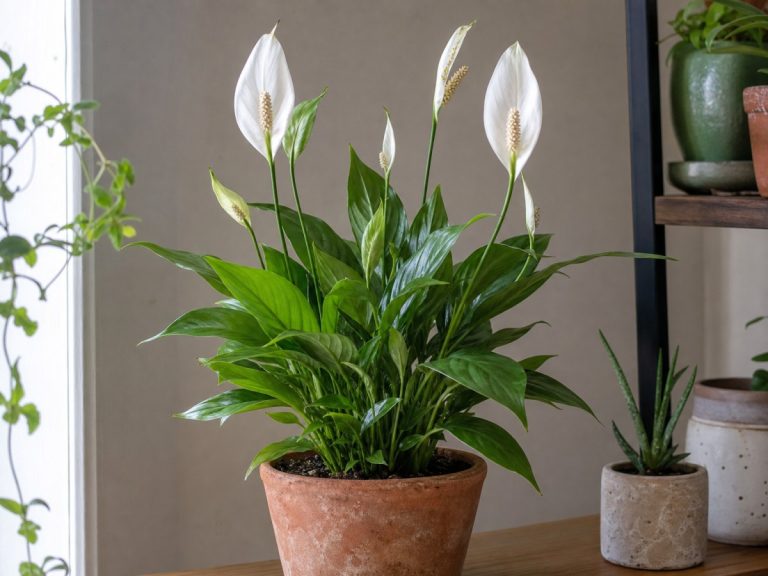
Peace lily
Spathiphyllum wallisii
- Bright indirect
- When top inch is dry
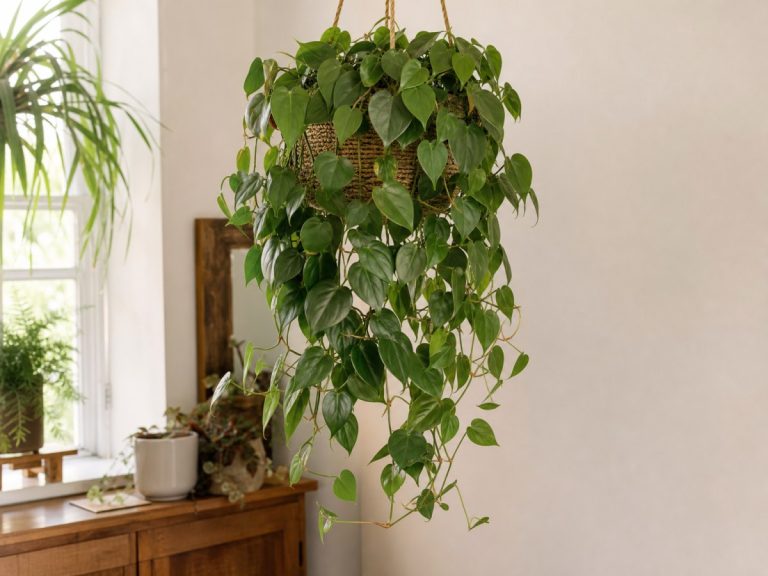
Heartleaf philodendron
Philodendron hederaceum
- Bright indirect
- When top inch is dry