Fiddle-leaf fig (Ficus lyrata)
Also known as: banjo fig
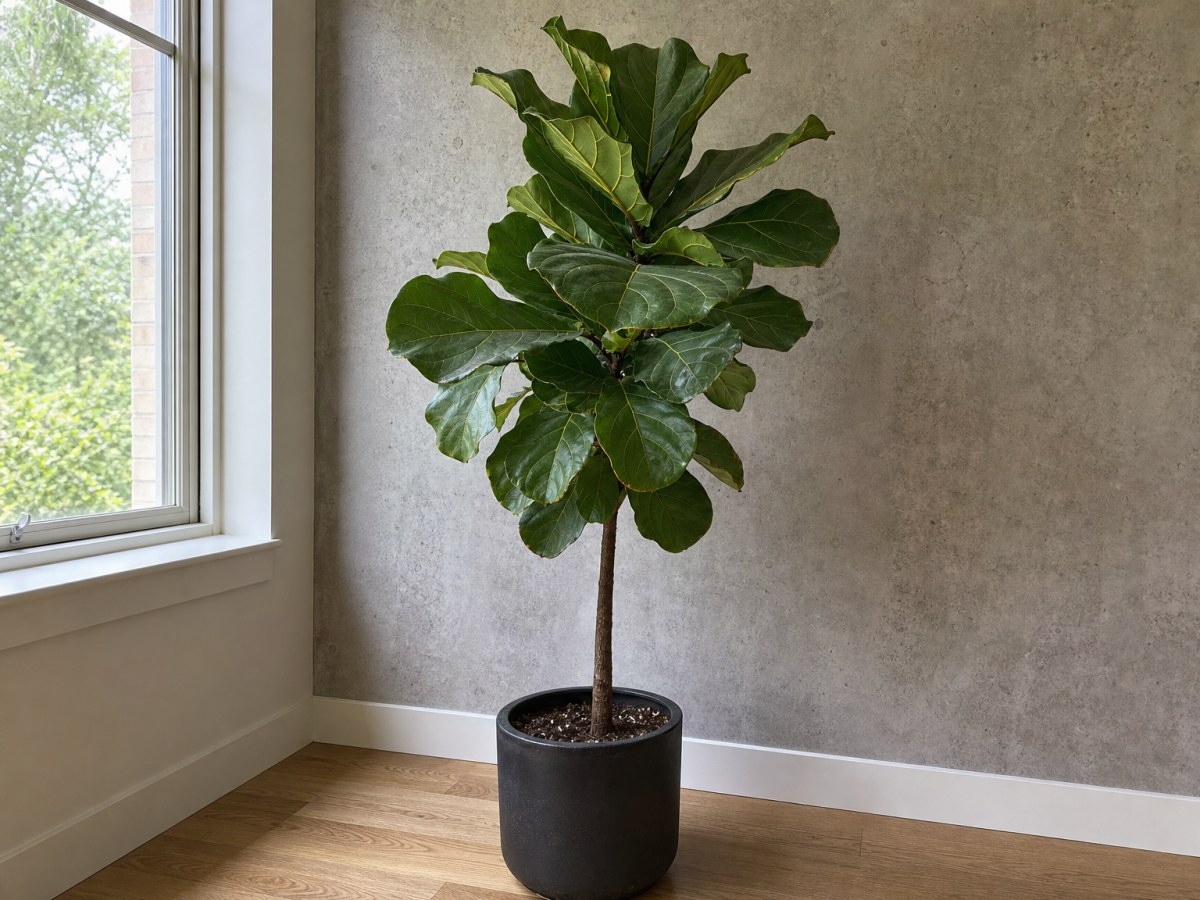
The fiddle-leaf fig (Ficus lyrata) is the tree with huge, violin-shaped leaves that took over interior design. It comes from the rainforests of West and Central Africa and does well indoors when it gets plenty of light, careful watering and a permanent spot away from drafts. It is not the easiest plant to please, but it rewards you with a sculptural look. Its milky sap can irritate skin, and the plant is mildly toxic to cats and dogs.
Quick info
- LightLots of bright light by a window; morning sun is fine, hot afternoon sun scorches.
- Ideal temperatureKeep above 55 °F (13 °C); below 50 °F (10 °C) it suffers. No frost.
- WateringWater when the top 1–2 in (3–5 cm) is dry; soggy soil makes leaves drop.
- GrowthModerate indoors, with most growth in spring and summer.
- MaintenanceModerate: a fixed spot, clean leaves, regular turning and careful watering.
- PetsMildly toxic to cats and dogs: stomach upset; the sap irritates skin.
Fact sheet
- Scientific name
- Ficus lyrata Warb.
- Common names
- banjo fig
- Family
- Moraceae
- Native to
- West and Central Africa
- Plant type
- Tree
- Light
- Bright indirect
- Watering
- When top inch is dry
- Size when grown
- 2.0–10 ft (0.6–3 m) (up to 98 ft (30 m) in the wild)
- Frost
- Not frost hardy (min. 50 °F (10 °C))
- USDA zones
- 10a-12b
Needs
- Light Bright indirect 2/3
- Water When top inch is dry 2/3
- Warmth Tropical 3/3
- Humidity Average 2/3
- Growth Moderate 2/3
- Maintenance Medium 2/3
Where it comes from
According to Kew's Plants of the World Online, Ficus lyrata is native to West and Central Africa: Benin, Cameroon, Gabon, Ghana, Guinea, Guinea-Bissau, Ivory Coast, Liberia, Nigeria, Sierra Leone and Togo. German botanist Otto Warburg described it in 1894. The older name Ficus pandurata still turns up on nursery tags, but it is now treated as a synonym.
It belongs to the mulberry family, Moraceae, along with the edible fig. In the wild it grows as a hemiepiphyte, sometimes starting life perched on another tree before sending roots down to the ground. NC State Extension gives a height of 60 to 100 ft (18 to 30 m) in its native forests. As a houseplant it usually stays between 2 and 10 ft (0.6 to 3 m).
How to recognize it
- Leaves: large, roughly 8 to 15 in (20 to 40 cm), thick and leathery, with a broad rounded tip, a pinched waist and a narrow base, like a violin. The surface is puckered, dark green above and paler below.
- Veins: prominent and yellowish green, standing out against the leaf.
- Trunk: brown and slightly flaky when young, turning gray and smooth with age. Young plants branch very little, which gives the classic single-trunk look.
- Sap: milky white, oozing from any broken stem or leaf.
- Figs: round, green with tiny white dots, turning reddish when ripe. They almost never form indoors because pollination depends on a specific fig wasp.
The cultivar 'Bambino' is a dwarf form with smaller leaves. Do not confuse it with the rubber plant (Ficus elastica), which has smooth, glossy leaves.
Care
Light
Give it plenty of light, ideally right next to a bright window. A few hours of morning sun are welcome, but hot afternoon sun through glass can burn the leaves. In a dim room it sheds its lower leaves and stops growing. Turn the pot a quarter turn every few weeks so it grows straight. Outdoors in frost-free climates it can take full sun once gradually acclimated.
Watering
NC State Extension notes that this plant is sensitive to overwatering. Water thoroughly until it drains, then wait until the top 1 to 2 in (3 to 5 cm) of soil is dry. Drying takes longer in winter. Both soggy soil and long dry spells cause leaf drop.
Soil and pot
Use a well-drained mix rich in organic matter, such as potting soil blended with bark and perlite. A drainage hole is essential. Move up one pot size every 2 to 3 years in spring. Large specimens can stay put if you refresh the top layer of soil.
Temperature and humidity
NC State advises keeping it above 55 °F (13 °C), and the RHS rates it H1b: outdoors only in summer, with lows of 50 to 59 °F (10 to 15 °C). Below 50 °F (10 °C) it suffers and frost kills it. Average household humidity is enough. What it hates is sudden change: cold drafts, an exterior door and heating or cooling vents cause brown spots and dropped leaves.
Feeding
From spring to late summer, feed once a month with a balanced liquid fertilizer at label strength. Stop in fall and winter. Small, pale new leaves can point to a lack of nutrients.
Pruning
To encourage side branches, cut off the top of the trunk just above a leaf in spring. Wear gloves, since the milky sap irritates skin. Wipe the leaves with a damp cloth now and then; they are big dust collectors, and dust cuts the light they receive.
Propagation
Stem cuttings with one or two leaves root in water or moist mix in a warm, bright spot. Air layering works well on thicker branches. The RHS also lists leaf-bud cuttings and seed.
Common problems
Sudden leaf drop
This is the number one complaint. It is almost always caused by a move, a cold draft or wrong watering, either too much or too little. Pick a bright spot, leave the plant there and water by checking the soil, not the calendar.
Brown spots
Dark patches starting at the edge or center of the leaf, with soil that stays wet, point to overwatering and stressed roots. Dry, pale patches on the window side are sunburn. NC State also links brown spots to temperature swings near vents.
Yellow leaves
An old lower leaf turning yellow now and then is normal. Several at once suggest overwatering or too little light.
Leaning plant or bare lower trunk
Both are signs of low light. Move it closer to the window and turn it regularly.
Pests
Scale, spider mites, thrips, aphids and mealybugs can show up, especially in dry air. Wipe the leaves, isolate the plant and use an insecticidal soap labeled for houseplants if the problem persists.
Safety: pets and children
Toxic to pets according to ASPCA
The ASPCA lists the fiddle-leaf fig among plants that are mildly toxic to dogs and cats: eating small amounts can cause stomach and intestinal upset, most often vomiting and diarrhea. The ASPCA page for Ficus species names a protein-digesting enzyme (ficin) and a psoralen (ficusin) as the toxic principles and lists the genus as toxic to horses as well.
The milky sap can irritate the skin of people and pets, and the RHS rates the plant as a skin allergen. Wear gloves when pruning or taking cuttings and wash your hands afterward. Keep fallen leaves away from toddlers and from pets that chew plants. If your pet eats some and shows symptoms, call your veterinarian.
Fun fact
The name lyrata means lyre-shaped, after the outline of the leaf. Like every fig, it hides its flowers inside the fig itself, and in the wild only tiny fig wasps can pollinate them. That is why potted plants practically never fruit.
Frequently asked questions
Why is my fiddle-leaf fig dropping leaves?
The usual causes are a recent move, cold drafts and incorrect watering. Give it a bright, permanent spot and water only when the top inch or two of soil is dry.
Is a fiddle-leaf fig toxic to cats and dogs?
Yes, mildly. The ASPCA says it can cause vomiting and diarrhea in cats and dogs, and the sap can irritate skin.
Can a fiddle-leaf fig take direct sun?
It loves bright light, and gentle morning sun helps. Strong afternoon sun through a window can scorch the leaves of a plant raised indoors.
How do I make my fiddle-leaf fig branch?
In spring, snip off the top of the trunk just above a leaf. New side shoots usually appear below the cut within a few weeks.
Can I root a fiddle-leaf fig cutting in water?
Yes. Take a stem piece with one or two leaves, let the sap stop flowing, and stand it in clean water in a warm, bright place. Pot it up once the roots are a couple of inches long.
Sources
- POWO · checked on October 25, 2026
- ASPCA · checked on October 25, 2026
- ASPCA · checked on October 25, 2026
- NC State Extension · checked on October 25, 2026
- RHS · checked on October 25, 2026
- UF/IFAS · checked on October 25, 2026
Profile reviewed on October 25, 2026 · How we build our profiles
Similar plants
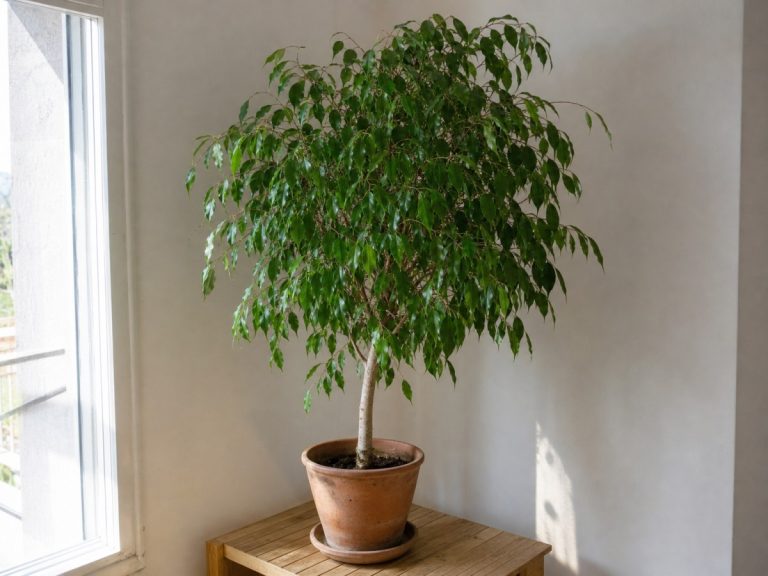
Weeping fig
Ficus benjamina
- Bright indirect
- When top inch is dry
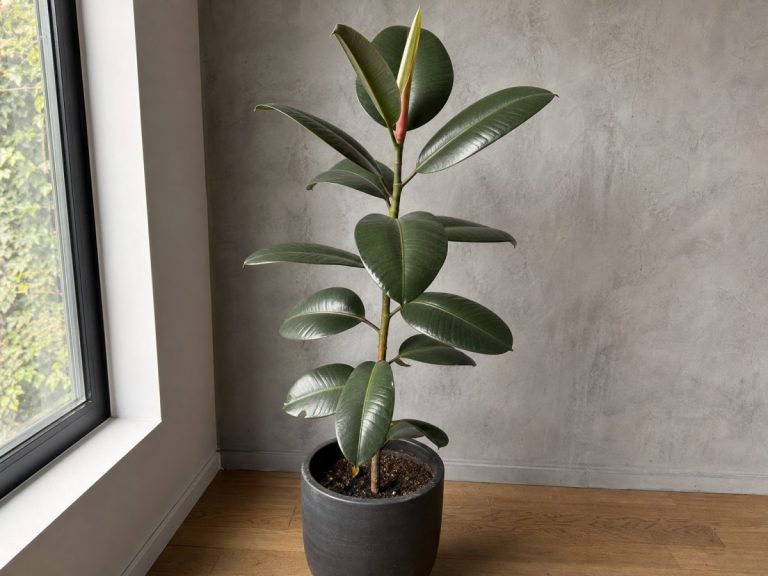
Rubber plant
Ficus elastica
- Bright indirect
- When top inch is dry
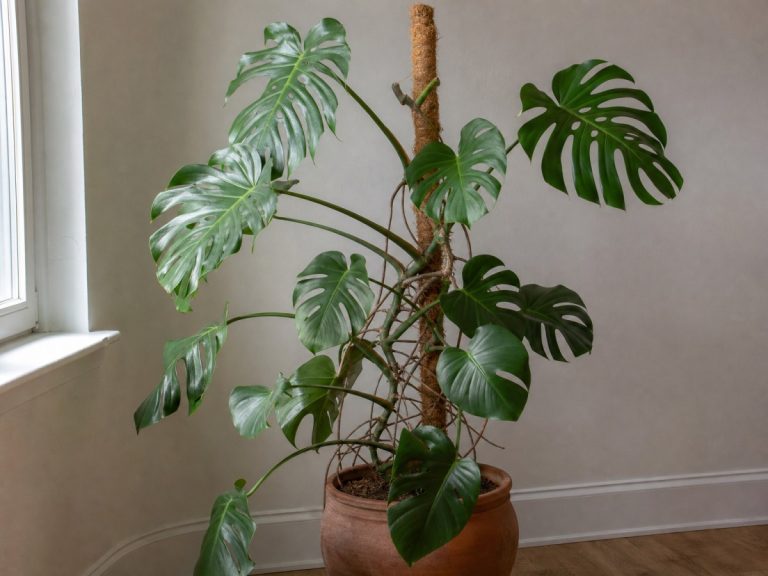
Monstera
Monstera deliciosa
- Bright indirect
- When top inch is dry
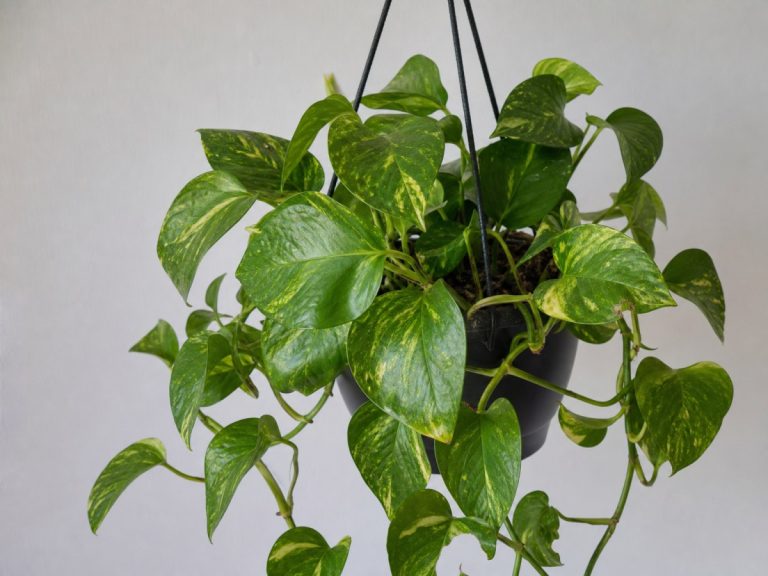
Golden pothos
Epipremnum aureum
- Bright indirect
- When top inch is dry