Golden pothos (Epipremnum aureum)
Also known as: pothos, devil's ivy, ivy arum, taro vine
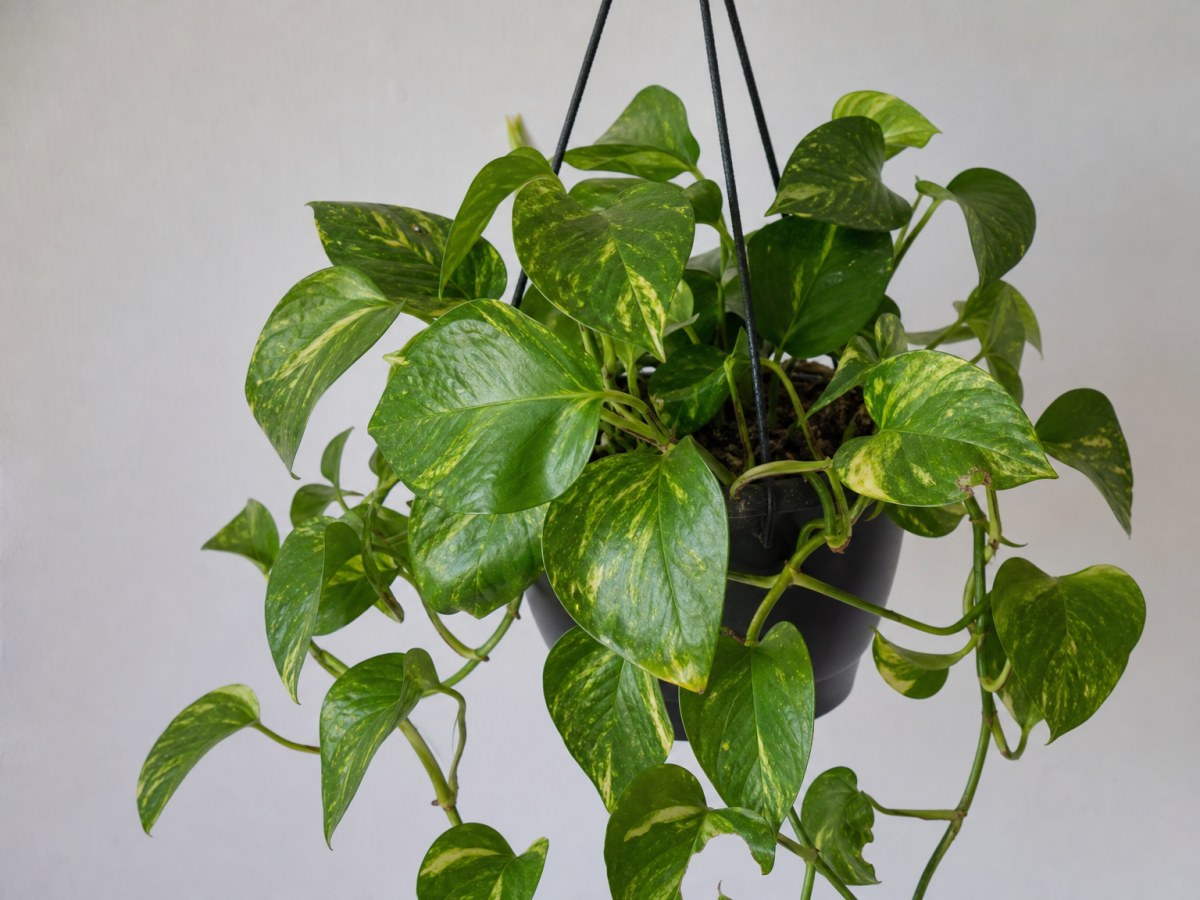
Golden pothos (Epipremnum aureum), also called devil's ivy, is the trailing vine with heart-shaped green leaves splashed with gold that spills off shelves in homes and offices everywhere. Its only native home is Mo'orea in the Society Islands of French Polynesia. It earns its easygoing reputation by putting up with low light and missed waterings, and it roots in a glass of water. The one real caution: its sap contains irritating crystals, so keep it away from pets.
Quick info
- LightBright, indirect light is best; it survives dim corners but loses its variegation.
- Ideal temperatureBest at 70–80 °F (21–27 °C) indoors; suffers below 50 °F (10 °C), no frost.
- WateringWater when the top inch or two of soil is dry; never let it sit soggy.
- GrowthModerate in a pot; stems lengthen steadily in warmth and good light.
- MaintenanceLow: an occasional tip prune and repotting every few years.
- PetsToxic to cats, dogs and horses: calcium oxalate irritates the mouth and throat.
Fact sheet
- Scientific name
- Epipremnum aureum (Linden & André) G.S.Bunting
- Common names
- pothos, devil's ivy, ivy arum, taro vine
- Family
- Araceae
- Native to
- Society Islands, French Polynesia
- Plant type
- Climber
- Light
- Bright indirect
- Watering
- When top inch is dry
- Size when grown
- 0.5–26 ft (0.2–8 m)
- Frost
- Not frost hardy (min. 50 °F (10 °C))
Needs
- Light Bright indirect 2/3
- Water When top inch is dry 2/3
- Warmth 70–81 °F (21–27 °C) 3/3
- Humidity Average 2/3
- Growth Moderate 2/3
- Maintenance Low 1/3
Where it comes from
Kew's Plants of the World Online lists Epipremnum aureum as native only to the Society Islands, specifically Mo'orea in French Polynesia, where it climbs through the wet tropical forest. George Bunting published the current name in 1964. Before that, the plant moved through several genera, so Pothos aureus, Scindapsus aureus and Rhaphidophora aurea still turn up on labels and in older books. For a while it was also treated as a cultivar of Epipremnum pinnatum.
Decades of cultivation have carried it across the tropics. POWO records introduced populations in Florida, Hawaii, Queensland, Brazil, India, the Caribbean and many Pacific and Indian Ocean islands. In Florida, the Exotic Pest Plant Council ranks it as a Category II invasive, and UF/IFAS advises homeowners not to plant it outdoors. Once loose, it climbs trees to about 40 ft (12 m) and produces enormous leaves.
How to recognize it
- Leaves: alternate, heart-shaped to ovate, with a pointed tip and a smooth edge. They are glossy and leathery, about 3–6 in (7.5–15 cm) long on potted plants, and the leafstalk has a groove along its upper side.
- Color: green with irregular golden yellow streaks and blotches on the standard form. 'Marble Queen' carries much more creamy white, and 'Pearls and Jade', bred in Florida, has smaller leaves flecked with white, gray and green.
- Stem: green and flexible, with short aerial roots at the nodes that grip rough surfaces. The RHS gives an ultimate height of 13–26 ft (4–8 m) when it has something to climb; in a pot, vine length depends on how you prune it.
- Adult form: when it climbs a tree outdoors, the leaves can grow to about 3 ft (90 cm) and sometimes split. That never happens indoors.
- Flowers and fruit: very rare in cultivation. The bloom is a spadix inside a boat-shaped spathe, and the berries ripen red-orange.
It is often mixed up with heartleaf philodendron (Philodendron hederaceum), which has thinner leaves, no groove on the leafstalk and new growth wrapped in papery sheaths, and with Scindapsus pictus, whose dark green leaves are spotted silver.
Care
Light
A spot near a bright window with indirect light suits it best. Pothos survives long stretches in low light, but the leaves shrink, the gaps between them stretch, and the gold or white variegation fades. Strong direct sun, especially through glass, can scorch the pale parts of the leaves, and that damage is permanent.
Watering
Let the top inch or two of soil dry out, then water until it runs from the drainage hole. The plant does better slightly on the dry side than soggy. Overwatering is the most common way to kill it, causing root rot and blackened leaf edges. Water less in winter.
Soil and pot
Use a light, well-drained mix rich in organic matter, such as a peat-free potting mix with orchid bark and perlite. The pot needs a drainage hole. Move up one size when roots fill the pot, ideally in spring.
Temperature and humidity
For indoor plants, UF/IFAS recommends 70–80 °F (21–27 °C). Growth slows when nights fall below about 65 °F (18 °C), and it suffers below 50 °F (10 °C). A few hours at 33–40 °F (1–4 °C) leaves scattered brown patches on the foliage, and so can sudden temperature swings. Normal household humidity is fine; a humidifier helps in very dry rooms.
Fertilizing
In spring and summer, feed regularly with a balanced liquid houseplant fertilizer, following the label for dose and frequency. Stop in fall and winter.
Pruning
The Royal Horticultural Society suggests tip pruning in spring to encourage branching. This is how you avoid a few long, bare strands: cut just above a node and use the pieces as cuttings. Wear gloves, since the sap irritates skin.
Propagation
Take stem pieces with at least one node and one leaf. In water or moist mix, buds usually break in two to three weeks and roots form in three to four. Layering works too. Plant several rooted cuttings in one pot for a fuller look sooner.
Common problems
Yellow leaves
Older leaves turn yellow when the soil stays too wet and also when it stays too dry. If the mix is always damp, water less often and check drainage; if it dries rock-hard, water more regularly. A single yellow leaf now and then is normal turnover.
Leaves turning plain green
New leaves with no variegation point to too little light. Move the plant somewhere brighter; upcoming leaves regain their color, but the green ones already out will not change.
Black or mushy leaf edges
A classic sign of root rot from overwatering. Unpot the plant, trim dark, soft roots and repot in fresh, faster-draining mix. If few roots remain, restart the plant from cuttings.
Brown or scorched patches
Scattered brown spots follow cold exposure or abrupt temperature changes. Dry, pale patches in the middle of variegated leaves are usually sunburn or heat damage.
Long, leggy vines
Low light and no pruning. Trim the tips, replant the cuttings in the same pot and give it more light.
Pests
Watch for mealybugs, scale insects and thrips. Wipe them off with a cotton swab dipped in rubbing alcohol, isolate the plant, and use insecticidal soap if they persist.
Safety: pets and children
Toxic to pets according to ASPCA; NC State Extension (cavalos)
The ASPCA lists golden pothos as toxic to dogs and cats. Every part contains insoluble calcium oxalate crystals, which cause oral irritation, intense burning of the mouth, tongue and lips, heavy drooling, vomiting and difficulty swallowing. NC State Extension also lists it as a problem for horses and includes diarrhea among the symptoms.
In people, chewing the plant causes pain and swelling in the mouth, and the sap can trigger contact dermatitis. The RHS describes it as harmful if eaten and a skin and eye irritant. Wear gloves when pruning, wash your hands afterward and hang the pot out of reach of small children and leaf-chewing pets. If any is swallowed, call your veterinarian or a poison control center.
Growing it outdoors responsibly
In frost-free climates it is tempting to let pothos scramble up a tree, where it turns into a giant with leaves the size of a doormat. In Florida, though, it is officially listed as invasive, and POWO records it as naturalized across much of the tropics. If you grow it outside, keep it in a container or a contained bed, and never dump trimmings in natural areas: any piece with a node can take root.
Frequently asked questions
Can pothos take direct sun?
It prefers bright, indirect light. Strong direct sun, especially through a window, scorches the pale parts of the leaves. A little gentle morning sun is usually fine.
Is pothos toxic to cats and dogs?
Yes. The ASPCA lists it as toxic to both because of insoluble calcium oxalate crystals, which cause mouth pain, drooling, vomiting and trouble swallowing.
Can pothos live in water permanently?
It can grow in water for a long time if you change the water often and keep it in good light. For stronger long-term growth, potting mix works better.
Why is my golden pothos turning all green?
Not enough light. In dim conditions new leaves come out without the gold streaks. More bright, indirect light brings the variegation back on the next leaves.
How do I make my pothos fuller?
Pinch or cut the vine tips in spring just above a node and root the cuttings in the same pot. More light also shortens the spacing between leaves for denser growth.
Sources
- POWO · checked on October 25, 2026
- ASPCA · checked on October 25, 2026
- NC State Extension · checked on October 25, 2026
- RHS · checked on October 25, 2026
- UF/IFAS · checked on October 25, 2026
- UF/IFAS Extension Charlotte County · checked on October 25, 2026
Profile reviewed on October 25, 2026 · How we build our profiles
Similar plants
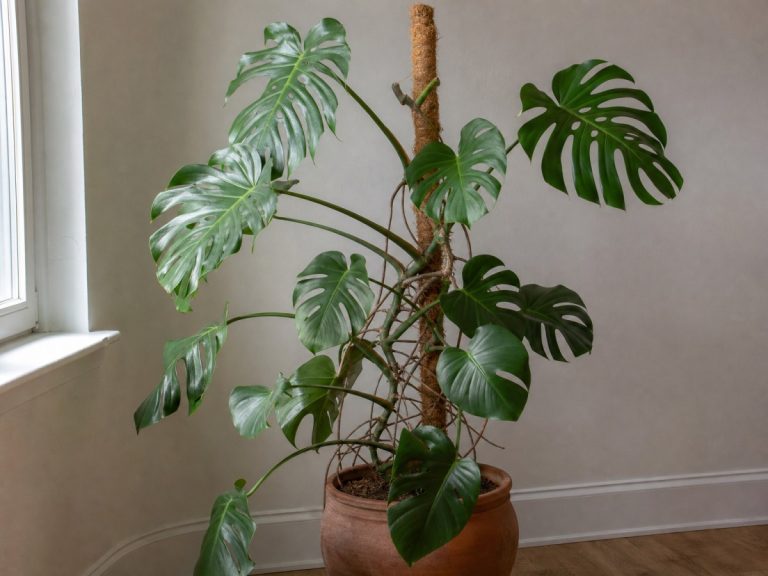
Monstera
Monstera deliciosa
- Bright indirect
- When top inch is dry
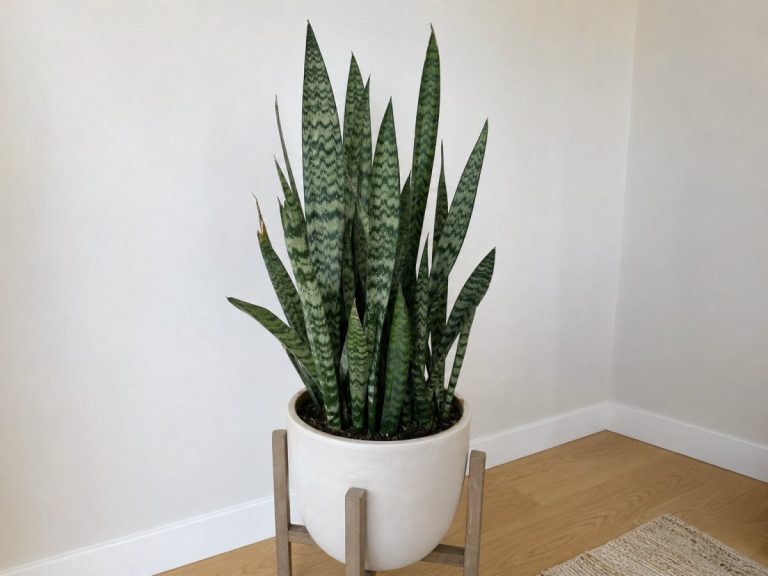
Snake plant
Dracaena trifasciata
- Bright indirect
- Let soil dry out
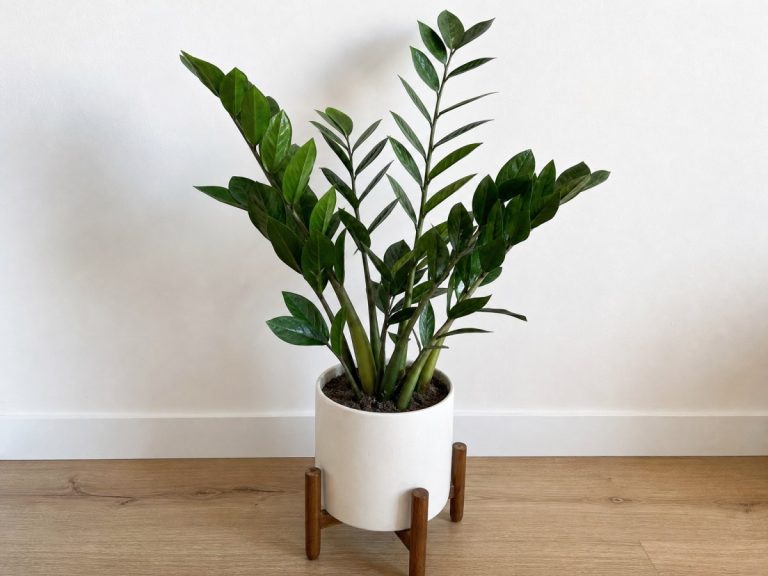
ZZ plant
Zamioculcas zamiifolia
- Bright indirect
- Let soil dry out
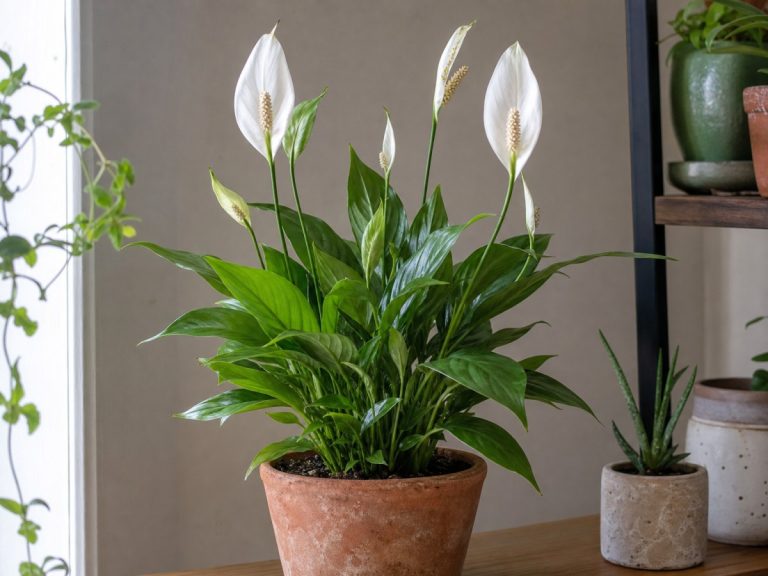
Peace lily
Spathiphyllum wallisii
- Bright indirect
- When top inch is dry