Snake plant (Dracaena trifasciata)
Also known as: mother-in-law's tongue, good luck plant, golden bird's nest, sansevieria
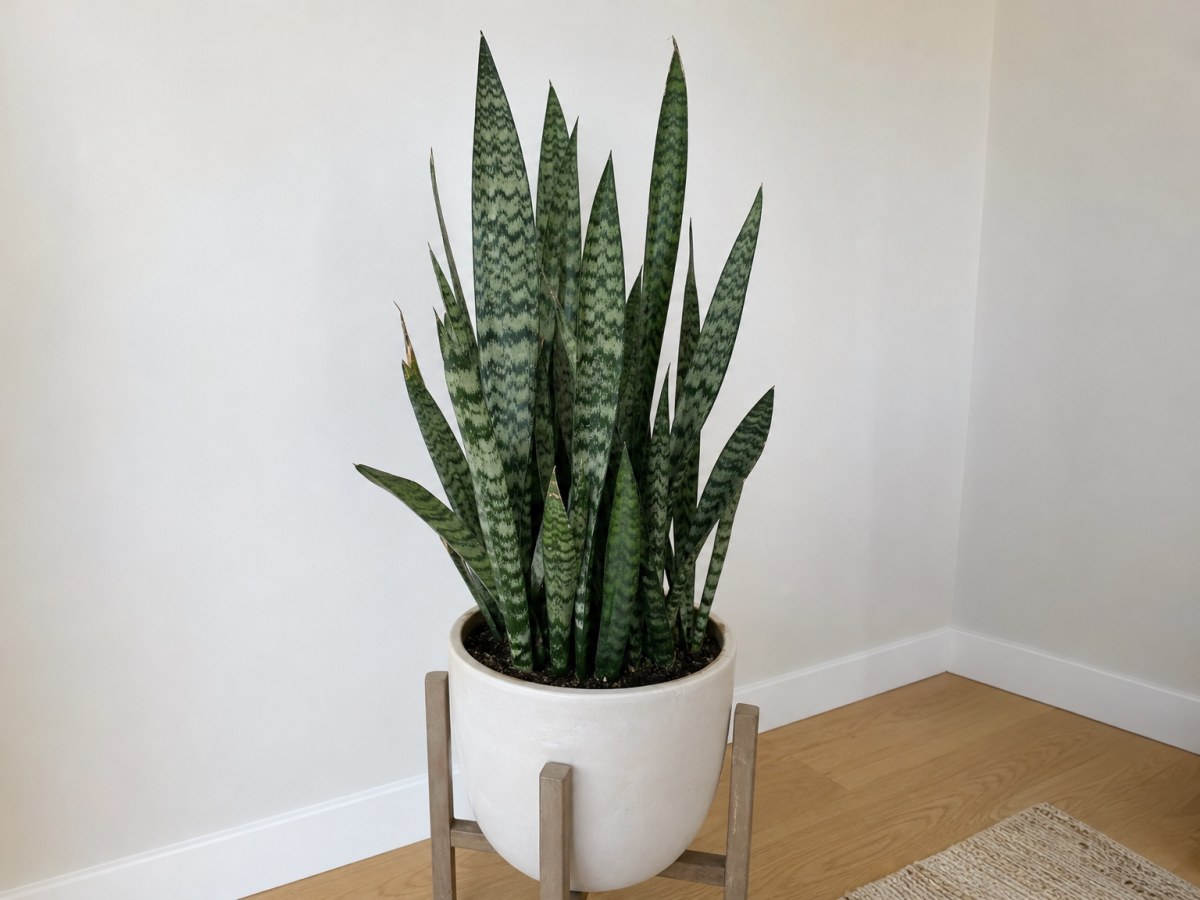
The snake plant (Dracaena trifasciata), still sold under its old name Sansevieria trifasciata and also called mother-in-law's tongue, is the houseplant with stiff, upright leaves banded in dark and pale green. It comes from tropical Africa, roughly from Nigeria to the Congo basin. It shrugs off low light, dry air and weeks without water, which makes it a favorite for beginners. The one thing that reliably kills it is too much water.
Quick info
- LightBright, indirect light is best; it tolerates low light and some sun, but harsh sun burns.
- Ideal temperatureTolerates about 50 °F (10 °C); colder than that harms it, and frost kills it.
- WateringWater only when the soil is completely dry; in winter, every one to two months.
- GrowthModerate; it slowly fills out into a clump from its rhizomes.
- MaintenanceLow: no pruning, and it only needs repotting when it gets crowded.
- PetsToxic to cats and dogs: saponins cause nausea, vomiting and diarrhea.
Fact sheet
- Scientific name
- Dracaena trifasciata (Prain) Mabb.
- Common names
- mother-in-law's tongue, good luck plant, golden bird's nest, sansevieria
- Family
- Asparagaceae
- Native to
- Tropical Africa, Nigeria to the Congo
- Plant type
- Succulent
- Light
- Bright indirect
- Watering
- Let soil dry out
- Size when grown
- 3–5 ft (1–1.5 m)
- Frost
- Not frost hardy (min. 50 °F (10 °C))
- USDA zones
- 10a-12b
Needs
- Light Bright indirect 2/3
- Water Let soil dry out 1/3
- Warmth Tropical 3/3
- Humidity Dry air ok 1/3
- Growth Moderate 2/3
- Maintenance Low 1/3
Where it comes from
Kew's Plants of the World Online lists Dracaena trifasciata as native to Nigeria, Cameroon, Gabon, Equatorial Guinea, the Central African Republic, Congo, the Democratic Republic of the Congo and Tanzania. It is a rhizomatous plant that grows mainly in the seasonally dry tropics, which goes a long way toward explaining its drought tolerance.
Botanist David Prain described it in 1903 as Sansevieria trifasciata, the name many shops still use. In 2017 David Mabberley moved the species into Dracaena, and it now sits in the asparagus family, Asparagaceae. POWO records it as naturalized in many warm regions outside Africa, including Florida, southern Mexico, the Caribbean, India and numerous Pacific and Indian Ocean islands.
How to recognize it
- Leaves: stiff, succulent, flat and pointed, rising straight from the soil in clumps or rosettes. They can reach about 4 ft (1.2 m) long and 2–4 in (5–10 cm) wide.
- Color: dark green crossed by irregular grey-green horizontal bands. Many cultivars have yellow or white edges.
- Size: the RHS gives a mature height of 3–5 ft (1–1.5 m). Dwarf cultivars such as 'Hahnii' form rosettes only about 6 in (15 cm) tall.
- Flowers: small, greenish-white to cream, fragrant and sticky, on a slender stalk. Potted plants rarely bloom.
- Fruit: orange berries, almost never seen indoors.
Popular cultivars include 'Laurentii' (yellow edges), 'Hahnii' (dwarf rosette), 'Moonshine' (silvery grey), 'Black Gold' (dark green with a gold rim) and 'Twisted Sister' (twisting leaves). The cylindrical snake plant, with round leaves, is a different species.
Care
Light
Bright, indirect light is ideal. The plant handles low light remarkably well, though it grows more slowly there. NC State Extension says it accepts a few hours of direct sun a day, while Penn State Extension warns that strong sun can burn the leaves, so if you move it into sun, do it gradually and avoid summer sun through glass.
Watering
From spring through fall, water only when the soil is dry. In winter, once every one to two months is enough. It can go a month without water and be none the worse, but soggy soil rots the rhizome and roots, which is the main way snake plants die. Avoid pouring water into the center of the rosette.
Soil and pot
Use a fast-draining mix, such as cactus potting mix or regular mix with plenty of perlite or coarse sand. A heavy ceramic or clay pot keeps tall leaves from tipping the plant over when the soil is dry. Repot only when it gets crowded, roughly every five years; 'Hahnii' prefers every three. Rootbound plants can even crack clay pots.
Temperature and humidity
NC State notes that it tolerates cool temperatures around 50 °F (10 °C), and the RHS rates it as needing a minimum of 41–50 °F (5–10 °C). Colder conditions damage it, and frost kills it. Dry indoor air is no problem.
Fertilizing
For a more robust plant, feed monthly during the growing season with an all-purpose fertilizer at half strength. Skip feeding in fall and winter.
Pruning
No pruning is needed. Just remove damaged leaves at the base with clean tools, wearing gloves.
Propagation
Division is easiest: unpot the plant, separate rhizome sections that carry leaves and pot each one up. You can also root leaf sections in barely moist mix, which is much slower and prone to rotting if kept too wet.
Common problems
Soft, yellow leaves or dark bases
Almost always overwatering and rot. Stop watering, unpot the plant and cut away soft, dark tissue. Replant healthy pieces in dry, well-drained mix and wait a few days before watering.
Leaves flopping over
This can mean a rotting rhizome, too little light, which weakens the leaves, or simply tall leaves in a lightweight pot. Check the roots and switch to a heavier container.
Dry tips or brown marks
Leaves that have been bent or broken do not heal; the scar stays. Pale, dry patches can be sunburn.
No new growth
In low light and in winter it nearly stops growing. More light and light feeding in spring help.
Pests
Mealybugs and spider mites show up occasionally, and the RHS mentions vine weevil. Wipe pests off with a cotton swab dipped in rubbing alcohol and use insecticidal soap if they persist.
No flowers
That is normal: potted snake plants rarely bloom. When they do, it is usually older, somewhat potbound plants.
Safety: pets and children
Toxic to pets according to ASPCA; NC State Extension (cavalos e humanos)
The ASPCA lists the snake plant as toxic to dogs and cats. The toxic compounds are saponins, which cause nausea, vomiting and diarrhea. NC State Extension adds drooling, loss of appetite, depression, vomiting occasionally with blood and dilated pupils in cats, rates the toxicity as low, and lists the plant as a problem for horses and children too.
The sap can irritate skin, and the RHS describes the plant as harmful if eaten, so wear gloves when dividing or cutting leaves. Keep it out of reach of plant-chewing pets and small children. If any is eaten, call your veterinarian or a poison control center.
Frequently asked questions
How often should I water a snake plant?
Only when the soil is completely dry. In warm weather that may take a few weeks; in winter, once every one to two months is usually enough.
Can a snake plant live in a dark room?
It tolerates very low light, but not darkness. In a dim corner it survives and grows very slowly; bright, indirect light keeps it firmer and better looking.
Is a snake plant toxic to cats?
Yes. The ASPCA lists it as toxic to cats and dogs because of saponins, which cause nausea, vomiting and diarrhea.
Why are my snake plant leaves soft and falling over?
The most common cause is overwatering, which rots the rhizome and roots. Let it dry out, remove soft parts and repot in well-drained mix.
How do I propagate a snake plant?
Divide the clump into rhizome sections with leaves, or root leaf pieces in barely moist mix. Division is faster and more reliable.
Sources
- POWO · checked on October 25, 2026
- ASPCA · checked on October 25, 2026
- NC State Extension · checked on October 25, 2026
- RHS · checked on October 25, 2026
- Penn State Extension · checked on October 25, 2026
Profile reviewed on October 25, 2026 · How we build our profiles
Similar plants
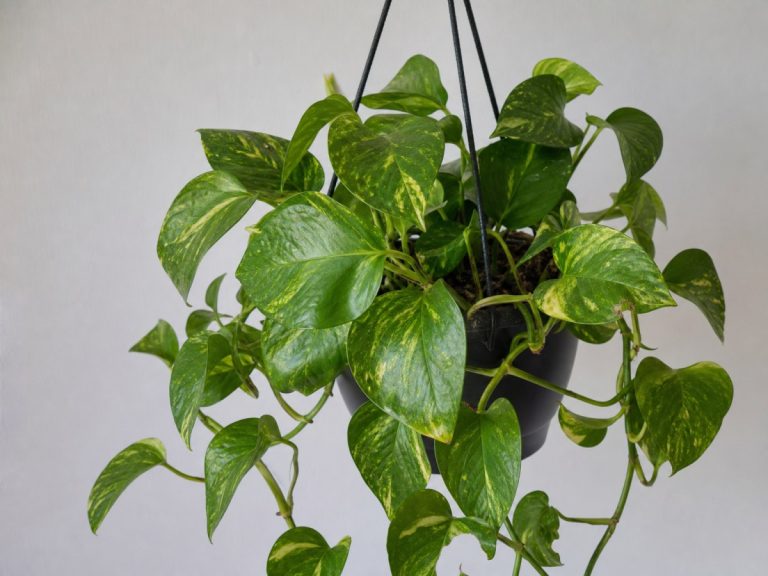
Golden pothos
Epipremnum aureum
- Bright indirect
- When top inch is dry
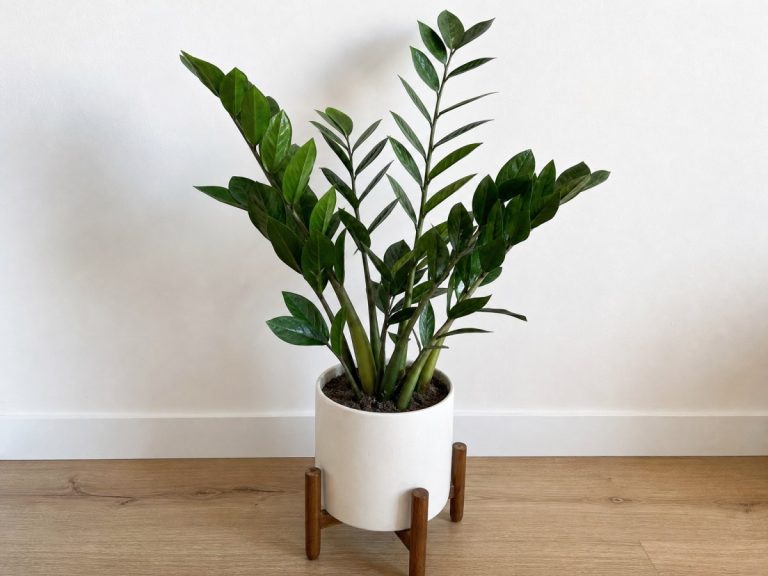
ZZ plant
Zamioculcas zamiifolia
- Bright indirect
- Let soil dry out
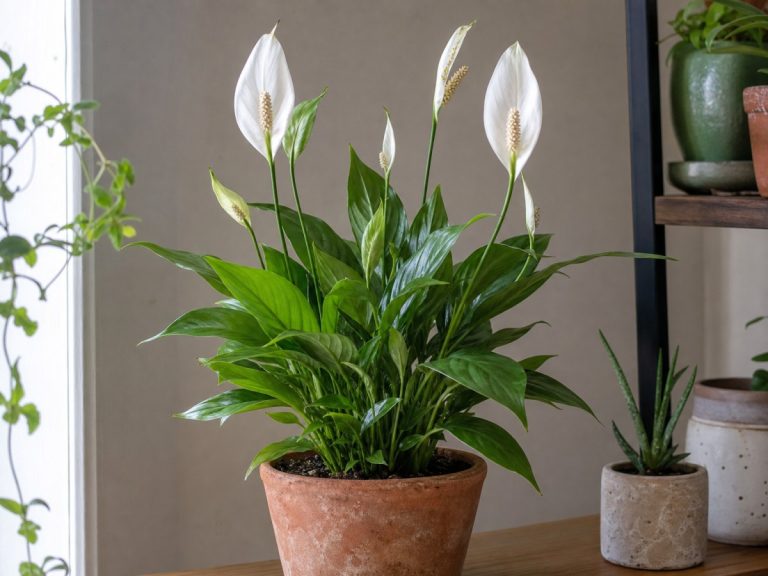
Peace lily
Spathiphyllum wallisii
- Bright indirect
- When top inch is dry
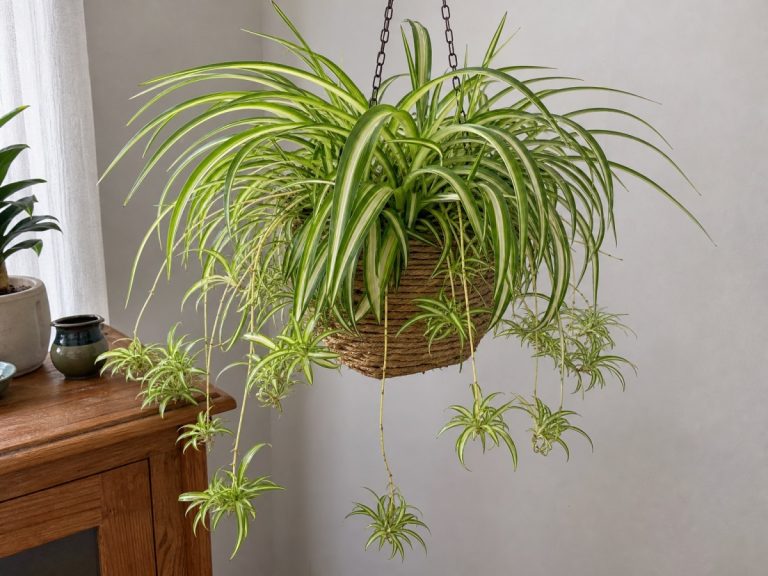
Spider plant
Chlorophytum comosum
- Bright indirect
- When top inch is dry