Monstera (Monstera deliciosa)
Also known as: Swiss cheese plant, split-leaf philodendron, Mexican breadfruit, fruit salad plant, ceriman
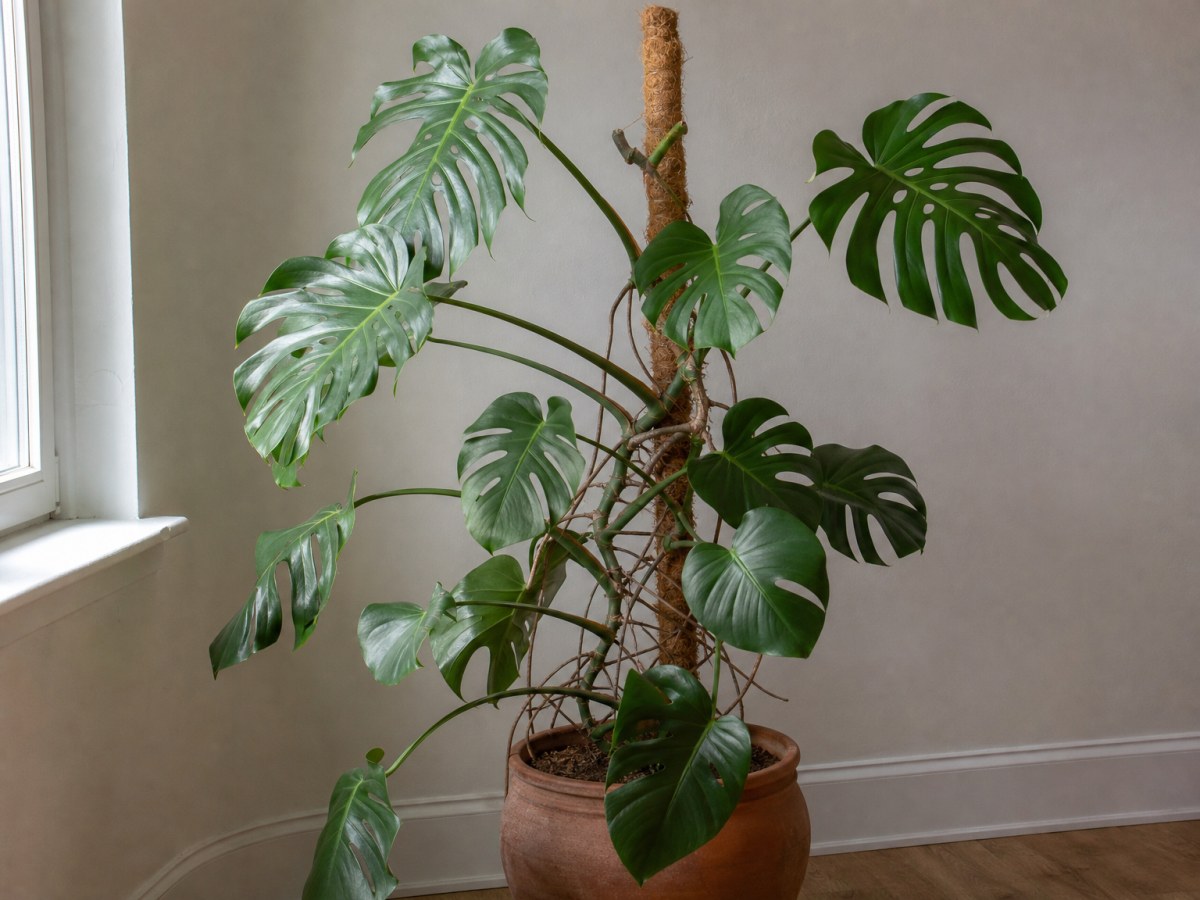
The monstera (Monstera deliciosa), often called Swiss cheese plant, is the climbing vine behind all those huge, glossy, slit and holey leaves. It comes from the rainforests of southern Mexico and Guatemala, yet it settles into a home without much fuss: bright light without harsh sun, a drink when the top of the soil has dried, and something to climb. It grows fast and forgives a lot. The one real caution is that it is toxic to cats and dogs.
Quick info
- LightBright, indirect light near a window; strong direct sun scorches the leaves.
- Ideal temperatureBest at 65–85 °F (18–29 °C); suffers below 50 °F (10 °C), no frost.
- WateringWater deeply, then let the top quarter of the soil dry before watering again.
- GrowthFast in warm, bright conditions; slows down in winter.
- MaintenanceModerate: a support pole, dusting the leaves, repotting every 2–3 years.
- PetsToxic to cats and dogs: calcium oxalate crystals irritate the mouth and throat.
Fact sheet
- Scientific name
- Monstera deliciosa Liebm.
- Common names
- Swiss cheese plant, split-leaf philodendron, Mexican breadfruit, fruit salad plant, ceriman
- Family
- Araceae
- Native to
- Southern Mexico and Guatemala
- Plant type
- Climber
- Light
- Bright indirect
- Watering
- When top inch is dry
- Size when grown
- 3–8 ft (1–2.5 m) (up to 69 ft (21 m) in the wild)
- Frost
- Not frost hardy (min. 50 °F (10 °C))
- USDA zones
- 10a-12b
Needs
- Light Bright indirect 2/3
- Water When top inch is dry 2/3
- Warmth 64–84 °F (18–29 °C) 3/3
- Humidity Average 2/3
- Growth Fast 3/3
- Maintenance Medium 2/3
Where it comes from
Kew's Plants of the World Online lists Monstera deliciosa as native to southern Mexico (the Gulf, Southeast and Southwest regions) and Guatemala. It has also gone wild in other warm places, including Costa Rica, Honduras, Nicaragua, the Azores and the Seychelles. Danish botanist Frederik Liebmann published the name in 1849.
It belongs to the arum family, alongside anthuriums and pothos. In the forest the plant starts out on the ground, then climbs the first sturdy tree it reaches, gripping the bark with aerial roots until it lives much like an epiphyte. In the wild it can reach about 70 ft (21 m). Despite the old nursery name split-leaf philodendron, it is not a philodendron at all.
How to recognize it
- Leaves: dark green, glossy and leathery, heart-shaped to broadly oval, on long stalks. Mature leaves easily pass 20 in (50 cm) and can reach about 3 ft (90 cm).
- Splits and holes: adult leaves have slits running out to the edge plus rows of oval holes near the midrib. Young leaves are solid, with no holes.
- Stem and roots: a thick green stem with long, brown, cord-like aerial roots growing from the nodes.
- Flower: a creamy white spathe up to 1 ft (30 cm) long wrapped around a thick spadix. Indoors it almost never blooms.
- Fruit: an elongated, cone-like spike covered in green hexagonal scales that drop off as it ripens.
It is often confused with Monstera adansonii and Rhaphidophora tetrasperma (sold as "mini monstera"), both with much smaller leaves. Variegated cultivars such as 'Thai Constellation' and 'Albo Variegata' carry cream or white patches and cost far more.
Care
Light
Give it bright, indirect light: near a bright window, or up to about 6 ft (2 m) back from it, with no more than a little gentle morning sun. Strong direct sun, especially through glass, burns the leaves. In a dim corner it survives but grows slowly, stretches out and takes longer to produce split leaves. Variegated plants need more light than plain green ones.
Watering
Water thoroughly until it drains from the bottom of the pot, then wait until the top quarter to third of the soil is dry. Push a finger into the mix: if the first inch or two still feels damp, hold off. In winter, with less light and warmth, water less often. Never leave the pot sitting in water.
Soil and pot
Use a well-drained mix rich in organic matter, for example a peat-free potting mix blended with orchid bark and perlite. The pot must have a drainage hole. Move up one size every 2 to 3 years in spring, or when roots poke out of the bottom.
Temperature and humidity
It does best between 65 and 85 °F (18–29 °C). Below 50 °F (10 °C) it starts to suffer, and frost kills the foliage. It likes humid air but copes with normal household humidity; in very dry or air-conditioned rooms, a humidifier or a pebble tray with water under the pot helps. Keep it away from cold drafts and heating vents.
Fertilizing
From spring through late summer, feed once a month with a balanced liquid fertilizer at the label rate. Cut back or stop in fall and winter. Too much fertilizer burns the roots.
Pruning and support
Give it a sturdy pole, such as a moss or coir pole, and tie the stem loosely to it. With support, leaves grow larger and more deeply cut. Prune in spring to control size or remove old and damaged leaves, using clean shears and gloves. Wipe the leaves with a damp cloth now and then to remove dust.
Propagation
Stem cuttings are the easiest route: cut a section with at least one node, ideally with an aerial root and a leaf, and root it in water or moist potting mix in a warm, bright spot. Roots appear within a few weeks. Air layering, rooting the stem while still attached to the parent, also works well. Seed is possible but slow.
Common problems
Yellow leaves
An old lower leaf turning yellow now and then is normal. Several yellow leaves at once, with soil that never dries, point to overwatering: the roots run out of air and rot. Let the mix dry more between waterings and make sure the pot drains. Low light and a lack of fertilizer can also make the plant look pale and yellowish.
No holes in the leaves
Young plants make solid leaves; the splits only show up once the plant matures. In low light and without support it grows slowly and takes longer to get there. More light and a sturdy pole usually bring split leaves within a few new leaves.
Brown tips and edges
Usually caused by very dry air, erratic watering (bone dry, then soaked) or fertilizer salt buildup. Even out your routine, and if a white crust forms on the soil, flush the pot with plenty of water.
Pale, scorched patches
Dry, bleached areas in the middle of a leaf are typically sunburn from direct sun. Move the plant back from the window.
Pests
Scale insects and spider mites show up from time to time. Wipe the leaves, isolate the plant and, if the problem continues, use an insecticidal soap labeled for houseplants.
Aerial roots everywhere
They are normal. Guide them onto the pole or down into the pot. You can trim a few if they get in the way, just not all of them.
Safety: pets and kids
Toxic to pets according to ASPCA
The ASPCA lists monstera as toxic to dogs and cats. All green parts contain insoluble calcium oxalate crystals, which cause intense burning and irritation of the mouth, tongue and lips, heavy drooling, vomiting and difficulty swallowing. NC State Extension also lists it as a problem plant for horses.
For people the toxicity is rated low, but chewing a leaf causes strong burning in the mouth and throat, and the sap can irritate skin. Wear gloves when pruning and keep the plant out of reach of toddlers and leaf-chewing pets. If an animal eats some, call your veterinarian.
The ripe fruit is edible and tastes like a mix of banana and pineapple, but only once the scales fall off on their own. Unripe fruit badly irritates the mouth, and some people react even to ripe fruit.
Did you know?
The species name deliciosa refers to the fruit. Where the plant fruits, it ripens from the base upward: the lower scales loosen first and expose the creamy pulp while the tip is still green and not ready to eat.
Frequently asked questions
Why doesn't my monstera have holes in its leaves?
Solid leaves are normal on young plants. Splits and holes appear as the plant matures, which happens faster with bright, indirect light and a pole to climb.
Is monstera poisonous to cats and dogs?
Yes. According to the ASPCA it is toxic to both because of calcium oxalate crystals, which cause mouth pain, drooling, vomiting and trouble swallowing.
Can a monstera take direct sun?
Strong direct sun scorches the leaves. Aim for bright light that does not hit the leaves directly, or just a little soft morning sun.
Can I root a monstera cutting in water?
Yes. Take a stem piece with at least one node and ideally an aerial root, set it in clean water, change the water every few days, and pot it once the roots are a couple of inches (about 5 cm) long.
Can you eat monstera fruit?
Only when fully ripe, with the green scales falling off by themselves. Unripe fruit irritates the mouth. Houseplants rarely fruit.
Sources
- POWO · checked on October 20, 2026
- ASPCA · checked on October 20, 2026
- NC State Extension · checked on October 20, 2026
- RHS · checked on October 20, 2026
Profile reviewed on October 20, 2026 · How we build our profiles
Similar plants
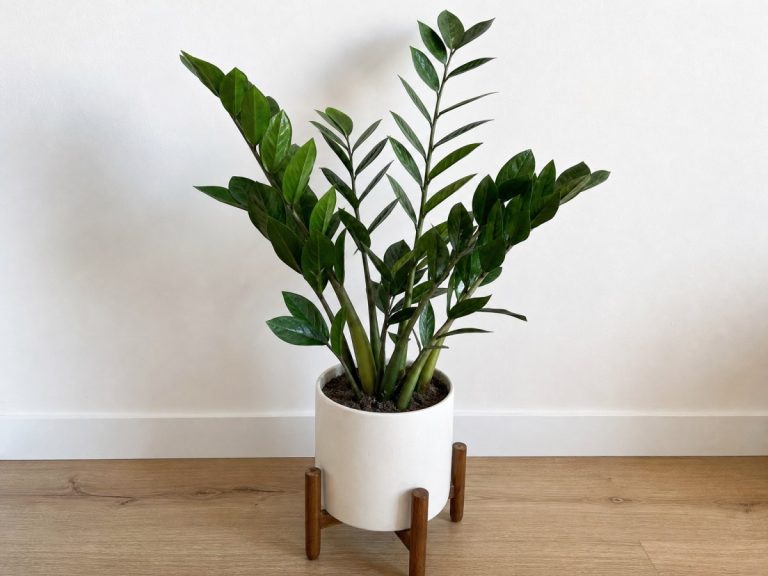
ZZ plant
Zamioculcas zamiifolia
- Bright indirect
- Let soil dry out
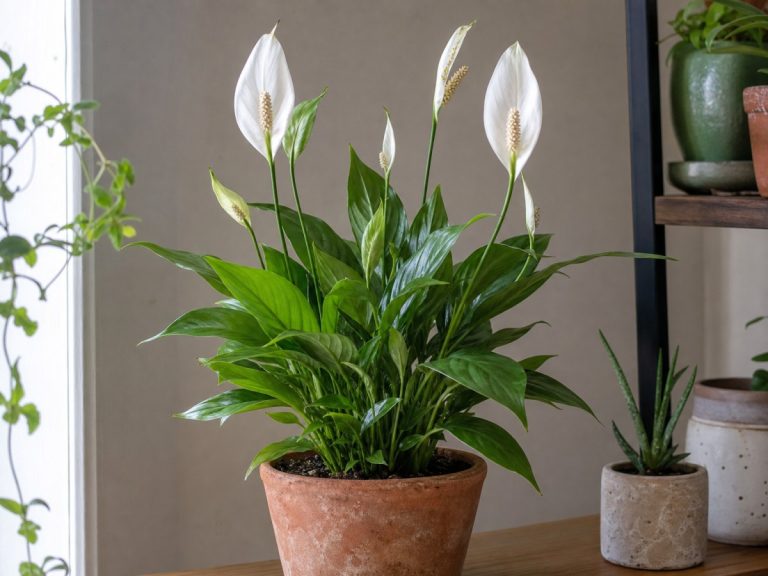
Peace lily
Spathiphyllum wallisii
- Bright indirect
- When top inch is dry
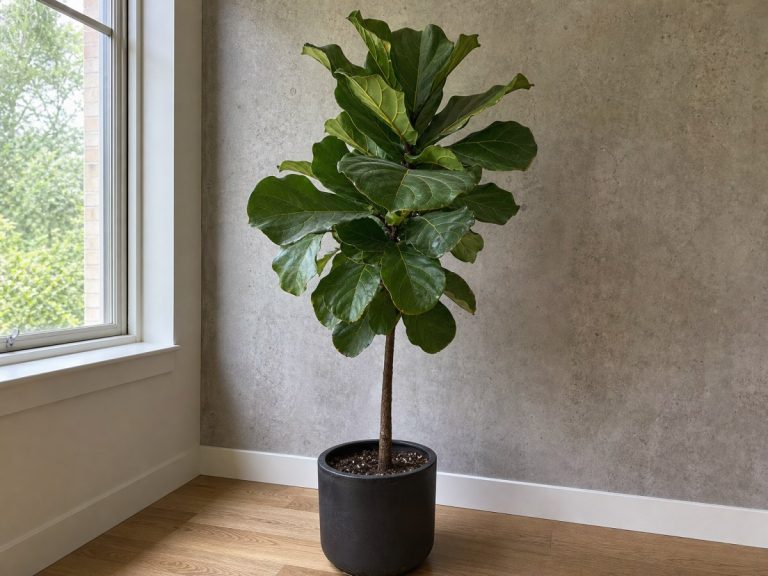
Fiddle-leaf fig
Ficus lyrata
- Bright indirect
- When top inch is dry
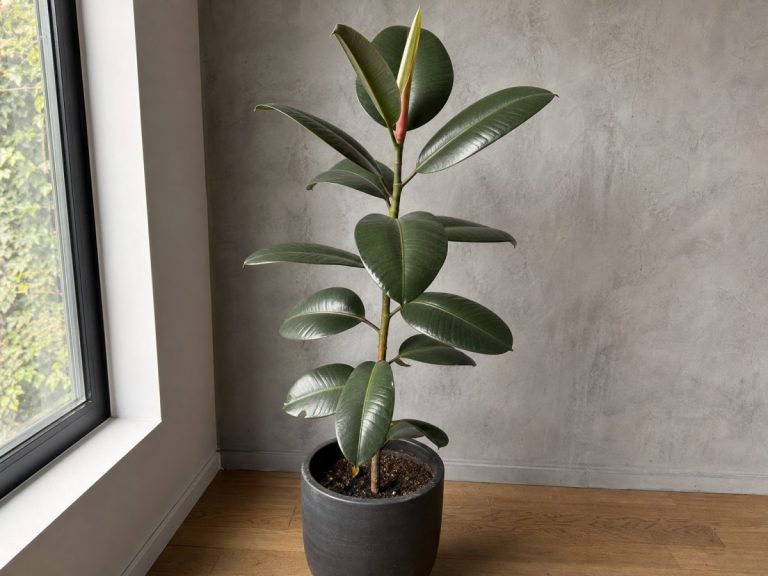
Rubber plant
Ficus elastica
- Bright indirect
- When top inch is dry