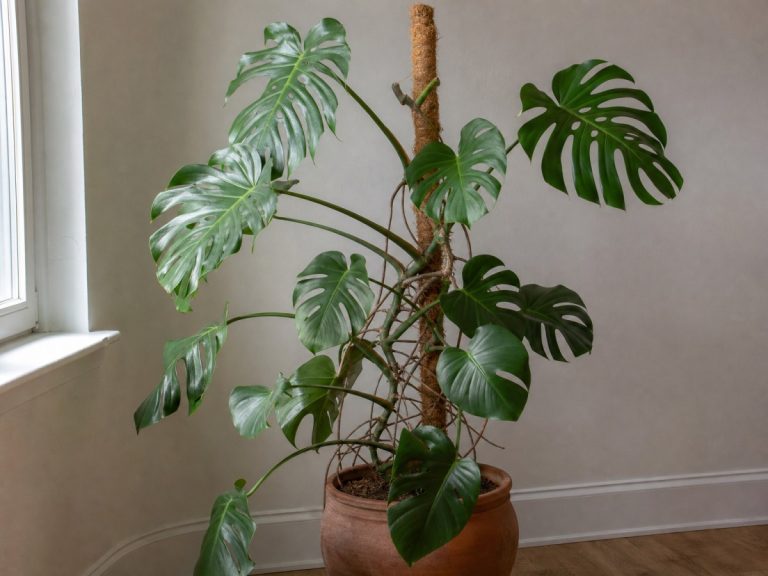
Yellow Leaves on Houseplants: How to Find the Cause and Fix It
A yellow leaf is a symptom, not a disease. Look at where it shows up, check the soil and the light, and change one thing at a time.
A yellow leaf tells you something has changed, but not what. The good news is that indoors the cause is almost always the plant's surroundings: water, light, fertilizer or temperature. Pests and diseases do happen, but far less often than people assume. So before you buy any product, take a few minutes to look closely.
Start by noticing which leaves are yellow
The pattern is your most useful clue. Note what you see before changing anything:
- One or two old leaves at the bottom: often just natural aging. Plants shed older leaves to put energy into new growth.
- Several leaves at once, with soil that stays damp: suspect overwatering.
- The whole plant pale green or yellowish: possibly a nitrogen shortage, meaning it needs fertilizer.
- Only new leaves yellow, sometimes with green veins: often a lack of iron, manganese or zinc, frequently because the potting mix has become too alkaline.
- Older leaves yellowing at the edges or between the veins: may point to potassium or magnesium.
- Yellow speckles, fine webbing or tiny bugs underneath: check for spider mites or scale.
Overwatering: the number one cause
Too much water is the most common reason indoor plants turn yellow and fail. When the soil stays soggy, there is no air in the pot, so roots suffocate and begin to rot. Without healthy roots the plant cannot take up water or nutrients, and the leaves yellow, sometimes drooping even though the soil is wet.
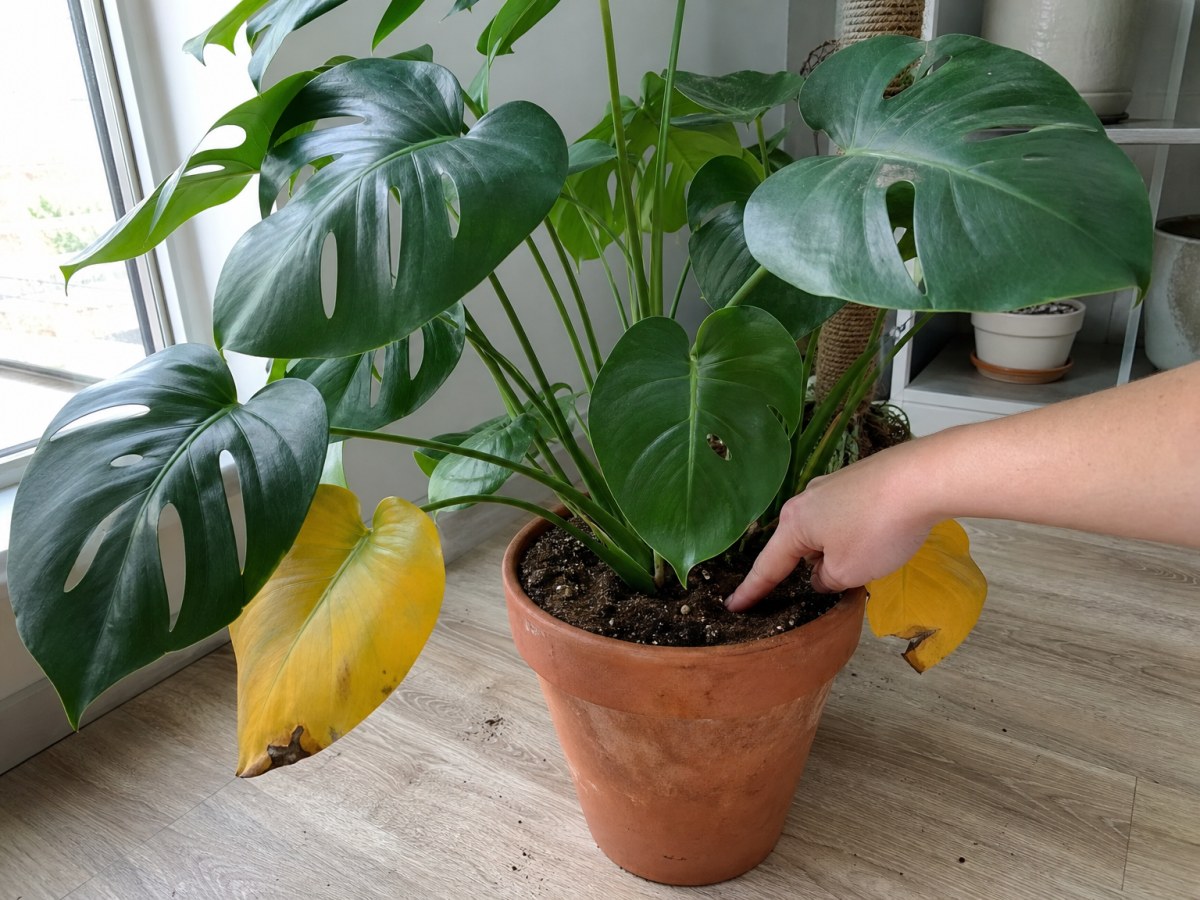
How to check: push a finger about 2 inches (5 cm) into the soil. If it is still damp days after watering, this is probably your problem. Also make sure the pot has a drainage hole and isn't sitting in a saucer of water.
What to do: let the soil dry before the next watering, empty the saucer and, if the pot doesn't drain, switch to one with a hole and a chunkier, airier mix. If the soil smells sour or the roots are dark and mushy, unpot the plant, trim off the rotten parts and repot in fresh mix.
Underwatering
The opposite also causes yellowing. When the soil stays dry too long, older leaves turn yellow and then crispy, often from the tips. The soil pulls away from the sides of the pot, and water runs straight through without soaking the root ball. Water slowly until it drains from the bottom, then repeat a few minutes later. If the root ball is bone dry, soak the pot in a basin for about half an hour.
Too much or too little light
In low light a plant can't make enough energy to support all its leaves, so it drops the oldest ones while new leaves come in small and pale. Move it closer to a bright window. Strong direct sun, especially through glass, can bleach and burn the leaves of shade-loving plants, leaving yellowish or whitish patches on the side facing the window. In that case, move the plant back or filter the light with a sheer curtain.
Fertilizer: too little or too much
A plant that has sat in the same pot for years without feeding tends to turn evenly pale green: that is a nitrogen shortage. Feed during the growing season, usually spring through late summer, and cut back in winter. But don't overcorrect. Too much fertilizer burns roots and yellows leaves too, sometimes with brown tips and a white crust on the soil. If you suspect overfeeding, flush the pot with plenty of water and skip fertilizer for a few months.
When yellow shows up between the veins of new leaves, pH may be the issue: in alkaline potting mix, iron and manganese get locked up and the plant can't absorb them. Replacing old potting mix often solves it.
Temperature and drafts
Cold air from a window, an air conditioner blowing on the plant or a heater right next to it all cause stress and yellow leaves. Very warm nights also weaken plants. Most houseplants prefer nights a little cooler than days, around 60 to 65 °F (16–18 °C). Pick a stable spot away from doors, vents and radiators.
Compacted soil and a cramped pot
Over time potting mix breaks down, compacts and drains poorly, and roots fill the pot. Both make it harder for the plant to take up water and nutrients. If water is slow to soak in or roots are poking out of the drainage hole, it is time for a bigger pot and fresh mix.
Pests
Spider mites leave leaves stippled with yellow dots, sometimes with fine webbing underneath. Scale insects look like small bumps on stems and veins, and mealybugs like tufts of white cotton. Isolate the plant, wipe the leaves with a damp cloth and, if the problem continues, use an insecticidal soap labeled for houseplants.
Step-by-step diagnosis
- Note where the yellow is: old leaves, new leaves or the whole plant.
- Feel the soil: soggy, damp or dry?
- Check the drainage hole and the saucer.
- Watch how much light the spot gets through the day.
- Recall when you last fertilized and last repotted.
- Inspect the undersides of the leaves with a flashlight.
- Change one thing at a time and give it a few weeks before judging the new growth.
Should I cut off yellow leaves?
A fully yellow leaf rarely turns green again. If the cause isn't fixed, it usually goes brown and dries out. You can remove it with clean scissors once you have found the cause; the leaves that grow afterward are what tell you the problem is solved.
Frequently asked questions
Can a yellow leaf turn green again?
Rarely. Fix the cause and watch the new leaves: if they come in green and firm, the plant has recovered.
Do yellow leaves always mean overwatering?
It is the most common cause indoors, but not the only one. If the soil is always damp, probably yes. If it is dry, look at underwatering, light or fertilizer instead.
Will fertilizer fix yellow leaves?
Only if the cause is a nutrient shortage. Feeding a plant with waterlogged roots, or one that is already overfed, makes things worse.
Sources
- University of Maryland Extension
- Cornell Cooperative Extension Monroe County
- UF/IFAS Florida-Friendly Landscaping
- University of Wisconsin-Madison Extension
Profile reviewed on October 20, 2026 · How we build our profiles